

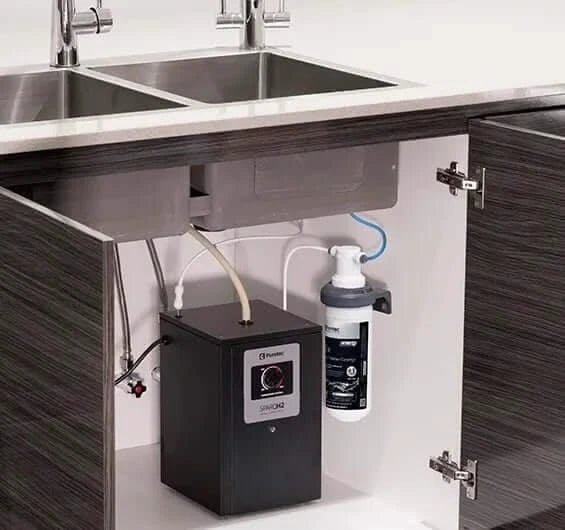
Reverse Osmosis Water Filter Systems Australia
Compare Our Reverse Osmosis Systems
Choose How You Want to Order
Not every water filter setup is the same. Choose supply only if you already have an installer arranged, select supply and installation together where available, or compare your options if you are still deciding what best suits your home.
Supply Only
Best if you already have a licensed plumber or installer arranged.
You receive the water filter system and the components listed with that product. Installation and site-specific plumbing work are not included unless shown or selected separately.
Additional cartridges, fittings, valves, pipework changes, pressure limiting valves, electrical work, drainage, compliance upgrades or removal of existing equipment may be required depending on your installation.
Supplied & Installed
Best if you want the water filter system and installation organised together.
Select your preferred water filtration system, complete the installation questions on the product page and choose any applicable installation options before checkout.
Installation availability and final requirements depend on your location, access, existing plumbing, selected filter system and site conditions.
Not Sure What You Need?
Water filter systems vary by filtration type, flow rate, cartridge setup, property size and water quality concerns.
Compare under-sink, whole-house and drinking-water filtration systems using the ranges and selection tools throughout the site.
Consider your water source, treatment goals, required flow, cartridge setup, property size and installation location before choosing.


Reverse Osmosis Water Filter Systems for Brisbane, Gold Coast & Major Australian Metros
Reverse osmosis water filter systems provide point-of-use drinking-water treatment using an RO membrane together with additional filtration stages depending on the system.
Residential reverse osmosis is most commonly installed under the kitchen sink and used for drinking, cooking, tea, coffee, bottles and food preparation.
Installed Today supplies reverse osmosis systems across supported mainland Australian markets, with supplied and installed options available on selected systems in eligible Brisbane and Gold Coast service areas.
What Makes Reverse Osmosis Different?
How Does a Reverse Osmosis Water Filter Work?
Reverse osmosis uses pressure to move incoming water through a semipermeable membrane.
Water that passes through the membrane becomes the treated drinking-water stream, while dissolved material rejected by the membrane is carried away through a separate drain-water stream.
Residential RO systems also commonly use pre-filtration and post-filtration stages to protect the membrane and condition the water before or after membrane treatment.
Reverse Osmosis vs Carbon Drinking Water Filters
| System Type | How It Treats Water | Common Starting Point | Main Considerations |
|---|---|---|---|
| Carbon Filter | Water passes through activated carbon or other cartridge media | Taste, odour and product-specific contaminant reduction | Cartridge performance, flow and servicing |
| Twin-Stage Filter | Two cartridges perform separate treatment functions | Sediment plus carbon or specialist media | Cartridge selection and treatment claims |
| Reverse Osmosis | Pre-treatment plus membrane separation and other stages | More comprehensive point-of-use treatment | Pressure, drain connection, membrane, flow and maintenance |
The Reverse Osmosis Membrane Is the Key Treatment Stage
The RO membrane is what separates reverse osmosis from a conventional sediment or carbon drinking-water filter.
It is designed to reject a range of dissolved substances according to the membrane and system specifications.
Membrane performance depends on factors including incoming pressure, water temperature, water quality, membrane condition and system design.
Why Reverse Osmosis Systems Use Pre-Filters
RO membranes generally operate as part of a multi-stage system rather than as the only filtration component.
Sediment and carbon pre-filters can help protect the membrane from particulate loading and other water-quality conditions according to the system design.
Pre-filters normally require more frequent replacement than the RO membrane itself.
Post-Filters and Final Drinking Water Treatment
Some reverse osmosis systems use additional treatment after the membrane.
This can include carbon polishing or other product-specific media intended to condition the final drinking water.
Where remineralisation or pH-conditioning is included, check the exact product configuration rather than assuming it is standard across all reverse osmosis systems.
Puretec RO270 and WFW Compact Reverse Osmosis
The current Installed Today reverse osmosis collection contains two dedicated drinking-water systems: Puretec RO270 and WFW Compact Reverse Osmosis System.
Puretec RO270
A dedicated under-sink reverse osmosis system with a 7L storage tank and dedicated filtered-water faucet.
WFW Compact RO
A compact under-sink reverse osmosis option for kitchens where drinking-water filtration and efficient use of cupboard space are priorities.
Which One?
Compare treatment stages, physical layout, filtered-water delivery, servicing, warranty and installation requirements rather than price alone.
Reverse Osmosis Systems with a Storage Tank
Some residential RO systems store treated water in a small pressurised tank so filtered water is available at the drinking-water tap without waiting for the membrane to produce the full required flow in real time.
The Puretec RO270 currently uses a 7L storage tank.
Tank position needs to be considered alongside filter housings, pipework, waste plumbing, bins and other under-sink equipment.
Compact Reverse Osmosis for Smaller Kitchen Cupboards
Compact RO systems can suit kitchens where available cupboard space is limited or where a cleaner under-sink arrangement is preferred.
Compact design does not remove the need to allow room for tubing, filtration components, drainage and future servicing.
Check the actual dimensions of the system and the clearance required for cartridge or membrane replacement before ordering.
Reverse Osmosis Performance Depends on Water Pressure
Reverse osmosis relies on water pressure to move water through the membrane.
If incoming pressure is too low, filtered-water production and overall performance can be reduced.
Excessive pressure can also require pressure control depending on the system.
Check the operating-pressure requirements of the selected model rather than assuming every property is automatically suitable.
Why Reverse Osmosis Systems Need a Drain Connection
Reverse osmosis creates both treated water and a reject-water stream.
The reject stream carries concentrated material separated during the membrane process and is normally connected to the kitchen waste system according to the product and installation requirements.
This is one of the key installation differences between RO and a basic under-sink carbon filter.
Filtered Water and Reject Water Ratios Vary by System
Reverse osmosis does not convert every litre entering the system into drinking water.
The ratio between treated water and reject water varies with membrane design, incoming pressure, water temperature, water quality and the individual RO system.
Compare the actual product specifications if water efficiency is an important purchasing factor.
Reverse Osmosis and Total Dissolved Solids
Total Dissolved Solids, usually shortened to TDS, is a measure of dissolved material in water.
Reverse osmosis is designed to reduce dissolved material as part of its membrane treatment process.
A TDS reading by itself does not identify which substances are present and should not be treated as a complete water-quality or safety test.
Check Verified RO Performance for the Contaminants That Matter
Reverse osmosis can provide broader contaminant reduction than many basic drinking-water filters, but performance still needs to be checked against the individual product.
Where fluoride, PFAS, lead, selected metals, nitrate, salts or another specific substance is important, check the exact system's stated reduction performance and applicable testing or certification.
Do not assume that every reverse osmosis system provides identical reduction performance simply because both use an RO membrane.
Does Reverse Osmosis Remove Minerals?
RO treatment reduces a range of dissolved material, which can include naturally occurring minerals depending on the membrane and operating conditions.
Some systems use an additional remineralisation or pH-conditioning stage after reverse osmosis.
If this feature matters to you, choose a model that specifically includes it rather than assuming all RO systems do.
Reverse Osmosis Is Usually Point-of-Use Filtration
Residential reverse osmosis systems are typically used for the relatively small volume of water required for drinking and cooking.
Whole-home filtration operates at much higher flow rates because it treats water for showers, bathrooms, laundries and multiple fixtures.
A household can use both: whole-home filtration on the main incoming supply and additional RO treatment at the kitchen.
Reverse Osmosis vs Standard Drinking Water Filtration
A standard drinking-water filter can be ideal when taste, odour, chlorine or other product-specific treatment goals are the priority.
Reverse osmosis is the more specialised option when the household wants membrane-based treatment and broader reduction of dissolved material.
Reverse Osmosis as an Under-Sink Kitchen Filter
Most residential RO installations are located below the kitchen sink, placing the filtration system close to the main drinking and cooking water outlet.
Unlike a simple inline carbon filter, RO normally needs additional space for membrane stages, tubing and a drain connection, plus a storage tank where the selected system uses one.
Dedicated RO Tap or Compatible 3-Way Mixer?
Dedicated Tap
A separate small tap provides the filtered-water outlet while the existing kitchen mixer remains unchanged.
3-Way Mixer
A compatible 3-way mixer can provide hot, cold and filtered water from one tap body with a separate filtered-water pathway.
Check Compatibility
Not every filtered mixer is automatically suitable for every RO system. Confirm compatibility before ordering.
Measure the Cupboard Before Ordering Reverse Osmosis
RO installations need enough space for the complete filtration system and enough clearance for future servicing.
- Filter housing or cabinet size
- RO membrane position
- Storage tank where applicable
- Waste trap and drain pipe
- Cold-water connection
- Isolation valve
- Dishwasher hoses
- Bins and drawers
- Filter replacement clearance
- Drain connection access
Check the Filtered Tap Position Before Installation
A dedicated RO tap normally needs a suitable mounting position at the sink or benchtop.
Where a new hole is required, the sink or benchtop material matters. Stone and specialty surfaces can require specialist drilling and should be planned before the filtration installation.
Alternatively, a compatible 3-way mixer can avoid adding a separate visible filter tap.
Reverse Osmosis Filters and Membranes Need Maintenance
RO systems use multiple replaceable filtration components that can have different service intervals.
Depending on the system, maintenance can include:
- Sediment pre-filter replacement
- Carbon pre-filter replacement
- Post-filter replacement
- RO membrane replacement
- Remineralisation media where fitted
- System flushing
- Leak checks
- Storage-tank checks where applicable
Replacing or Upgrading Reverse Osmosis
If an existing RO system has worked well, identify its model, filtration stages, membrane, tap arrangement and storage setup before choosing the replacement.
Before ordering, check:
- Existing system model
- Number of filtration stages
- Membrane type
- Current filtered-water tap
- Storage tank where fitted
- Incoming water pressure
- Drain connection
- Available cupboard space
- Replacement cartridge costs
- Reason for upgrading
Reverse Osmosis Water Filters Brisbane
Brisbane is a primary reverse-osmosis installation market for Installed Today. Selected RO systems can be ordered with professional installation in eligible Brisbane, Logan, Ipswich, Moreton Bay and Redlands service areas.
Common Brisbane installations include under-sink RO systems, dedicated filtered-water taps, replacements of existing reverse osmosis equipment and compatible 3-way mixer setups.
Final requirements depend on water pressure, cupboard access, drain connection, tap arrangement, sink or benchtop material and existing plumbing.
Reverse Osmosis Water Filters Gold Coast
Selected reverse osmosis drinking-water systems are also available supplied and installed across eligible Gold Coast service areas.
RO can suit households wanting a more comprehensive point-of-use drinking-water treatment system than a standard carbon filter.
Check incoming water pressure, drain access, under-sink clearance, filtered-water tap arrangement and future servicing space before ordering.
Buy Reverse Osmosis Systems Across Major Australian Metro Areas
Supply-only reverse osmosis systems are available for customers arranging their own suitable installer across supported mainland Australian markets.
Our main RO markets include Brisbane, Gold Coast, Sunshine Coast, Sydney, Melbourne, Perth and Adelaide, together with Townsville, Cairns, Toowoomba, Newcastle, Central Coast, Wollongong and Geelong.
Brisbane and Gold Coast remain the primary Installed Today installation markets. Customers elsewhere can choose supply only where delivery is available and arrange their own suitable installer.
Choose How You Want to Order
Supply Only
Choose supply only if you already have a suitable plumber or installer arranged and simply need the reverse osmosis system supplied.
Installation, tap fitting, drilling, drain connection, valves, pressure control and plumbing changes are not included unless specifically shown.
Brisbane Installation
Selected reverse osmosis systems are available with installation in eligible Brisbane metro service areas.
Availability depends on product, postcode, plumbing, drain access and kitchen layout.
Gold Coast Installation
Selected RO systems are also available supplied and installed in eligible Gold Coast areas.
Final requirements depend on the selected system and existing installation.
Choose Reverse Osmosis When Membrane Treatment Matches the Goal
Reverse osmosis is a more specialised drinking-water treatment method than a basic sediment or carbon filter, but that does not make RO the automatic answer for every household.
Compare water source, treatment goal, verified contaminant reduction, incoming pressure, filtered-water demand, reject-water arrangement, under-sink space, tap setup, servicing and membrane replacement costs before ordering.
Where a specific contaminant matters, check the individual system's stated treatment performance rather than assuming every RO membrane or system performs identically.
Reverse Osmosis Water Filter FAQs
Common questions about choosing, ordering and installing reverse osmosis water filter systems for cleaner, fresher drinking water at the kitchen sink.
What is a reverse osmosis water filter?
A reverse osmosis water filter is a drinking water filtration system that uses a fine membrane as part of a multi-stage filtration process. It is commonly installed under the kitchen sink and connected to a dedicated filtered water tap or suitable drinking water outlet.
How does reverse osmosis filtration work?
Reverse osmosis works by pushing water through a fine membrane that helps separate many dissolved impurities from the drinking water. Most systems also include pre-filtration and post-filtration stages to support taste, odour and overall water quality.
Is reverse osmosis better than a standard kitchen water filter?
Reverse osmosis is usually chosen when a higher level of drinking water filtration is wanted. A standard kitchen water filter may be enough for taste, odour and everyday chlorine reduction, while reverse osmosis is better suited to households wanting a more advanced under sink drinking water filtration system.
What does a reverse osmosis system reduce?
A reverse osmosis system can help reduce a wide range of dissolved solids and common drinking water impurities, depending on the system design, membrane, cartridges, water pressure and maintenance. Always check the product specifications for the exact reduction claims of the selected system.
Does reverse osmosis improve taste and odour?
Yes, a suitable reverse osmosis system can help improve drinking water taste and odour. Most systems use multiple filtration stages, including carbon filtration, to help improve the quality of water used for drinking, cooking, tea and coffee.
Does reverse osmosis remove minerals from water?
Reverse osmosis can reduce many dissolved minerals along with other dissolved solids. Some systems include pH neutral or remineralisation stages to adjust the final water profile. The best option depends on your water source and personal drinking water preference.
Is reverse osmosis water safe to drink?
Reverse osmosis water is commonly used for drinking water when the system is correctly selected, installed and maintained. Cartridges and membranes should be replaced as required to help maintain water quality, flow and filtration performance.
Does a reverse osmosis system need a storage tank?
Many reverse osmosis systems use a small storage tank because filtered water is produced more slowly than regular tap water. Compact systems may vary by design, so check the product details to confirm whether the selected system includes or requires a tank.
Will reverse osmosis water flow slower than normal tap water?
Yes, reverse osmosis water usually flows slower than standard tap water because it passes through multiple filtration stages and a fine membrane. Flow depends on water pressure, system design, tank capacity, cartridge condition and membrane performance.
Does reverse osmosis waste water?
Reverse osmosis systems usually send some reject water to drain as part of the filtration process. The amount depends on the system design, water pressure, membrane condition and installation setup.
Can reverse osmosis be installed under my kitchen sink?
In many homes, yes. Reverse osmosis systems are commonly installed under the kitchen sink, but the area must have enough space for the filter unit, cartridges, storage tank if required, hoses, fittings and access for future servicing.
Does reverse osmosis need a separate drinking water tap?
Many reverse osmosis systems connect to a dedicated drinking water tap. Some setups may be compatible with selected 3-way mixer taps or other suitable filtered water outlets, depending on the product, pressure, fittings and installation requirements.
Can I connect reverse osmosis to my existing kitchen mixer?
It depends on the existing mixer tap and the reverse osmosis system. Many standard kitchen mixers are not designed to carry reverse osmosis filtered water through a separate pathway. A dedicated filtered water tap or compatible 3-way mixer tap is usually required.
Do reverse osmosis systems need cartridge changes?
Yes. Reverse osmosis systems have cartridges and membranes that need replacement over time. Replacement timing depends on the system, water usage, water quality, cartridge type, membrane condition and manufacturer recommendations.
How often should reverse osmosis filters be replaced?
Replacement frequency varies by product and water conditions. Pre-filters, post-filters and membranes may have different service intervals. Heavy use, poor water quality, reduced flow or a change in taste can mean servicing is needed sooner.
Can I buy a reverse osmosis system supply only?
Yes. Choose supply only if you already have a licensed plumber or suitable installer arranged. Supply-only pricing is for the product only and does not include installation, tap installation, fittings, drainage connection, drilling, plumbing alterations, cabinetry changes, old system removal or compliance upgrades unless selected separately.
Can I order a reverse osmosis system supplied and installed?
Supplied and installed options may be available for selected reverse osmosis systems in eligible Brisbane and Gold Coast service areas. Availability depends on your address, under sink space, water pressure, drainage access, tap setup and installation requirements.
Does installation include drilling a new tap hole?
Drilling, cutting, stone benchtop work, sink modification, cabinetry changes and additional plumbing work are not automatically included unless shown in the selected installation option or chosen as an add-on. Site requirements can vary between kitchens.
Do you install reverse osmosis systems in Brisbane and the Gold Coast?
Installation options are available for selected reverse osmosis water filter systems in eligible Brisbane and Gold Coast service areas. Availability depends on the selected product, your address, existing plumbing, under sink space, drainage access and site requirements.