

How Do I Know When My Water Filter Needs Changing?
How Do I Know When My Water Filter Needs Changing?
Use the signs your system is giving you — pressure, taste, odour, cartridge age and service history — instead of relying on one generic replacement interval.
Water filter cartridges are consumable components. Replacement timing depends on the cartridge, system design, water quality, household use and manufacturer guidance. The most useful approach is to combine the recommended interval with what the filter is actually doing.
Does Your Filter Look Due for a Change?
Answer the three quick checks. The tool does not replace the manufacturer's service interval, but it helps identify whether the system is showing common signs of an overdue cartridge.
Answer all three questions
Your result will appear here.
The Best Time to Change a Water Filter Is Not One Fixed Number
Manufacturers set service intervals because cartridge performance changes with use, but real-world loading can be faster or slower depending on sediment, household demand, water chemistry and system type. Use the stated interval as the baseline, then watch for performance changes.
Pressure or Flow Drops
A gradual decline can indicate that a sediment or multi-purpose cartridge is becoming loaded and creating more resistance through the system.
Taste or Odour Returns
If chlorine taste, odour or another original issue starts returning, the treatment media may be approaching its useful service capacity.
Service Interval Reached
If the manufacturer specifies a replacement interval or capacity and the cartridge has reached it, service the system even if the water still appears normal.
Visible Sediment Loading
Some sediment cartridges visibly darken or collect debris as they load. Appearance alone is not always enough, but it can support other signs that servicing is due.
Unknown Service History
If you inherited the system with the property and do not know when it was last serviced, identify the system and cartridge type rather than assuming it is still within its service period.
System-Specific Service Requirements
Reverse osmosis, UV and multi-stage systems can have different replacement schedules for different components. Not every stage necessarily changes at the same time.
What to Check Before Ordering Replacement Cartridges
Matching the cartridge correctly is more important than choosing one that simply looks similar.
Find the System Model
Check the filter brand, model and housing so you can identify the intended replacement parts.
Check Cartridge Size
Confirm cartridge length, diameter and housing format. A 10-inch or 20-inch label alone may not be enough.
Match the Filtration Type
Confirm whether the stage is sediment, carbon, specialty media, RO pre-filter, membrane, post-filter or another component.
Follow the Service Schedule
Use the manufacturer's interval and capacity guidance for the specific product rather than applying one schedule to every filter.
Multi-stage filtration systems may use several cartridges that perform different jobs. A service kit can help match the required stages for a specific system, while RO and UV systems may also have components with different service intervals.
Different Systems Can Have Different Service Patterns
The correct maintenance pathway depends on the filtration system you own.
Whole-Home Filters
Whole-home cartridges handle larger volumes of water and may include sediment, carbon or staged media. Flow reduction can be an important service clue.
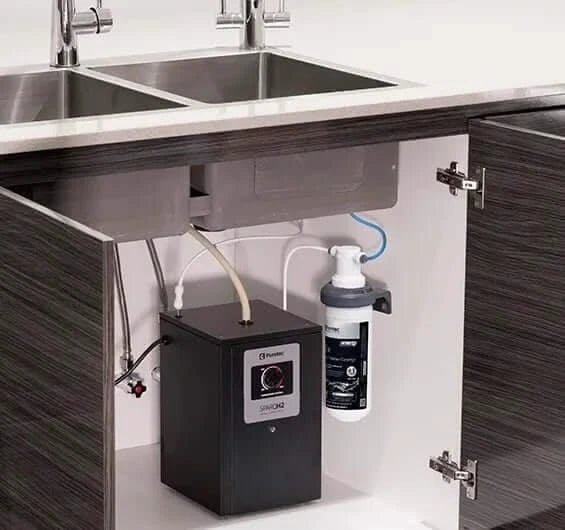
Under-Sink Drinking Water
Point-of-use systems often use carbon or multi-stage cartridges. Taste and odour returning can be a useful sign alongside the scheduled service interval.
Reverse Osmosis
RO systems commonly have pre-filters, carbon stages, a membrane and sometimes post-filters or remineralisation stages. These may not share one replacement schedule.
UV Systems
UV setups can include sediment pre-filtration as well as UV lamps and quartz-sleeve maintenance. Cartridge servicing is only one part of the overall maintenance plan.
Shower Filters
Small point-of-use cartridges can have their own capacity and replacement requirements based on the product design and household use.
Service Kits
System-specific service kits can simplify maintenance by grouping compatible replacement cartridges for the intended service interval.
Find the Right Maintenance Path
Use the system you already own to narrow the replacement parts, then confirm compatibility before ordering.
Water Filter Replacement FAQs
What are the signs that a water filter cartridge needs changing?
Common signs include reduced flow, pressure drop, taste or odour returning, visible sediment loading and reaching the manufacturer's recommended service interval or capacity.
Should I wait until the water tastes bad before changing the filter?
No. Taste is only one possible sign. Follow the manufacturer's scheduled replacement guidance even if the water still seems normal.
Can a dirty cartridge reduce water pressure?
Yes. As sediment and other material accumulate, resistance through the cartridge can increase and delivered flow may fall.
Do all cartridges need changing at the same time?
Not always. Multi-stage, reverse osmosis and UV systems can contain components with different service intervals. Follow the maintenance schedule for the exact system.
Can I replace a cartridge with one that looks the same?
Do not rely on appearance alone. Check the system model, cartridge size, diameter, micron rating, media type and compatibility with the housing.
Should new cartridges be flushed?
Many cartridges require flushing after installation to clear trapped air, carbon fines or other residues. Follow the instructions for the specific product before normal use.
Service the Filter Before Performance Falls Away
Use the manufacturer's schedule as the baseline, then watch pressure, flow, taste, odour and cartridge condition so servicing does not become guesswork.
