

Why Has My Water Filter Reduced Water Pressure?
Why Has My Water Filter Reduced Water Pressure?
Work out whether the restriction is coming from a blocked cartridge, overly fine filtration, a flow-rate mismatch, a valve, the filter housing or something outside the filter.
Every filtration system creates some resistance to flow. A noticeable drop in pressure or flow, however, usually points to cartridge loading, system sizing, filtration fineness, valve position, plumbing restriction or a change elsewhere in the water supply.
When Did the Pressure Drop Start?
Choose the closest situation. The result highlights the most likely first check before you replace the whole system.
Select the closest situation above
The tool will show the first checks that best match the way the pressure problem started.
Pressure and Flow Are Related, but They Are Not the Same Thing
Customers often describe any weak outlet as “low pressure”. In filtration, the useful question is whether the system is creating too much resistance to flow. A filter can have adequate inlet pressure but still deliver poor flow if the cartridge, housing or plumbing is too restrictive for the required demand.
Blocked Cartridge
Sediment captured by the cartridge increases resistance. A gradual decline in flow is a common sign that the filter is loading up and may need servicing or replacement.
Too Fine for the Application
Finer filtration can create more resistance than a coarser stage. The micron rating, cartridge area, media type and required household flow all need to work together.
System Too Small for Demand
A point-of-use filter and a whole-home filter have very different flow requirements. A system that is undersized for simultaneous household use can feel restrictive even when the cartridge is new.
Valve Not Fully Open
Isolation valves or bypass valves that are not fully open can restrict the water path. Check the installation configuration before assuming the cartridge is at fault.
Housing or Plumbing Restriction
Small fittings, narrow tubing, kinked lines, blocked strainers or other plumbing restrictions can reduce delivered flow independently of the filter media.
Problem Exists Before the Filter
If pressure is also poor upstream of the filtration system, the cause may be the water supply, pressure control, pump or property plumbing rather than filtration.
How to Narrow Down the Cause
The quickest way to troubleshoot a filtration pressure problem is to separate cartridge condition from system sizing and upstream supply.
Check When It Started
A slow decline points more toward cartridge loading; a problem from day one points more toward sizing, flow or installation.
Check Cartridge Age
Compare the current cartridge age and water use against the manufacturer's service interval and rated capacity.
Compare Before and After
If safe and practical to assess, compare supply behaviour upstream and downstream to determine whether the restriction is associated with the filtration path.
Check Flow Suitability
Confirm the filter, cartridge and housing are suitable for the required whole-home or point-of-use flow rather than choosing by micron rating alone.
Changing micron rating can change what the filter captures. If the current cartridge blocks quickly, the better solution may be staged filtration, a larger housing, greater cartridge surface area or addressing the incoming sediment load rather than sacrificing the treatment objective.
Whole-Home vs Drinking-Water Pressure Problems
Where the restriction occurs matters. Whole-home filtration needs enough flow for simultaneous fixtures, while an under-sink system serves a much smaller point-of-use demand.
Whole-Home Filters
Look at household peak flow, housing size, cartridge type, number of stages, inlet pressure and whether multiple outlets are being used at once.
Under-Sink & Drinking Water
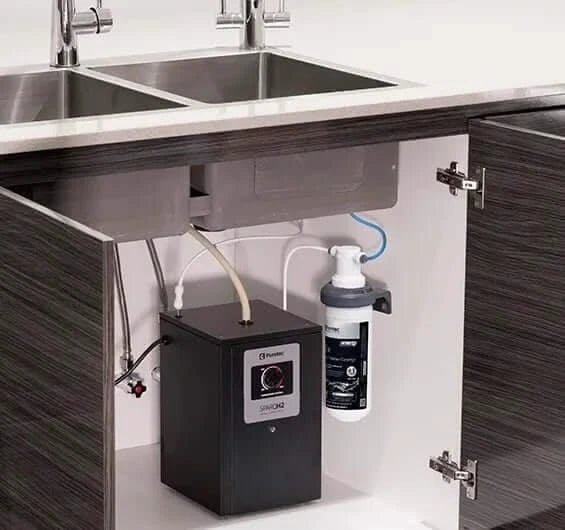
Check the dedicated filter tap, tubing, shut-off valve, cartridge condition and any storage or membrane stages used by the system.
Reverse Osmosis
RO systems behave differently from simple direct-flow carbon filters. Delivered flow can depend on feed conditions, membrane design and whether the system uses a storage vessel or direct-flow arrangement.
Where to Go Next
Once you know whether the problem is servicing, whole-home flow, point-of-use filtration or a broader treatment mismatch, compare the relevant range rather than replacing components at random.
Water Filter Pressure FAQs
Can a dirty water filter reduce water pressure?
Yes. As a cartridge captures sediment and other material, resistance can increase and delivered flow can fall. A gradual decline is a common reason to check cartridge condition and service timing.
Can a micron rating affect water pressure?
Yes. Finer filtration can create more resistance depending on cartridge design, media, surface area and flow. Micron rating should be considered alongside the system's required flow rather than by itself.
Why did pressure drop immediately after changing the cartridge?
The replacement cartridge may have a different media or micron rating, may not be correctly seated, or another part of the system may have been left restricted during servicing. Check the exact cartridge specification and installation.
Why is only my filtered kitchen tap slow?
If normal taps are unaffected, focus on the point-of-use filter, dedicated tap, tubing, valves, cartridge condition and any membrane or storage components specific to that system.
Should I use a larger micron cartridge to get more flow?
Not automatically. A coarser cartridge may change filtration performance. First determine whether the actual problem is cartridge loading, housing size, surface area, system flow rating or incoming sediment.
How do I know whether my whole-home filter is undersized?
If flow is acceptable with one outlet but drops significantly when several fixtures operate, compare the system's rated flow and pressure-drop information against the property's peak demand and installation conditions.
Find the Restriction Before Replacing the Filter
Check cartridge condition, micron rating, system size, valves and upstream supply first. Then match the filtration system to the flow the property actually needs.
