

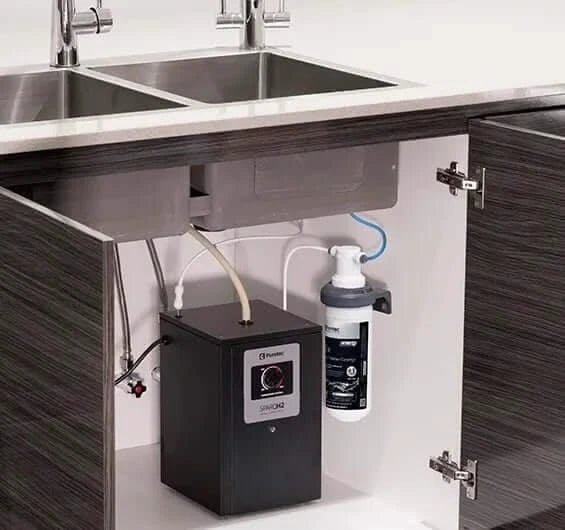
What Do Water Filters Remove?
What Do Water Filters Remove?
Match the water concern to the filtration technology before you choose a system.
Sediment filters, carbon cartridges, reverse osmosis and UV treatment do different jobs. Use the matcher to understand which technology is commonly considered for the issue you are trying to address, then confirm the performance claims of the exact product you are considering.
What Are You Trying to Improve?
Choose the issue closest to yours. This is a technology guide, not a claim that every product of that type removes the selected substance.
The tool will show the filtration technology commonly considered for that issue and where to browse next.
Important: filtration performance is product-specific. Check the exact manufacturer's reduction claims, test conditions and relevant certification before relying on a product for a particular contaminant. Where water safety is uncertain, appropriate water testing and professional advice may be required.
There Is No Single “Water Filter” That Removes Everything
A water filter can mean anything from a simple sediment cartridge to activated carbon, membrane filtration, reverse osmosis or ultraviolet treatment. The useful question is not simply “does a water filter remove it?” but “which treatment technology is designed for it, and does this particular product make a verified reduction claim?”
Sediment Filtration
Designed to capture suspended particles above the cartridge's rated filtration size. Common examples include dirt, rust, grit and visible sediment. It does not automatically address dissolved chemicals or microorganisms.
Activated Carbon
Commonly used for chlorine taste and odour reduction and may reduce other substances depending on the carbon type, cartridge design, flow rate, contact time and verified product claims.
Reverse Osmosis
Uses a semi-permeable membrane as part of a multi-stage treatment process and can reduce a broad range of dissolved substances when the selected system is designed and rated to do so.
UV Treatment
Uses ultraviolet light to inactivate susceptible microorganisms under suitable operating conditions. UV does not physically remove sediment, dissolved minerals or chemical contaminants from the water.
Softening & Scale Treatment
Hardness minerals are not the same problem as sediment or chlorine. Traditional softening, anti-scale and other scale-control technologies work differently and should not be treated as interchangeable.
Multi-Stage Treatment
Many filtration systems combine stages because one treatment can protect or complement another—for example sediment pre-filtration ahead of carbon, RO or UV.
What Different Water Filter Technologies Commonly Address
Use this as a starting map only. “Can address” does not mean every cartridge or system of that type has a verified claim for every substance listed.
| Water concern | Sediment | Carbon | Reverse Osmosis | UV | What matters most |
|---|---|---|---|---|---|
| Dirt, rust, grit and suspended sediment | Commonly suited | Depends on cartridge | Pre-filtration usually used | Not its job | Micron rating, surface area, sediment load and flow. |
| Chlorine taste and odour | Not its job | Common application | Often part of RO train | Not its job | Carbon type, contact time, capacity and verified reduction claim. |
| Chloramine | Not its job | Specialised carbon may be required | System-specific | Not its job | Do not assume ordinary carbon performs the same as a cartridge specifically rated for chloramine. |
| Dissolved salts and TDS | Not its job | Generally not its job | Common RO application | Not its job | Membrane performance, feed pressure, recovery and product specification. |
| Hardness / scale | Not its job | Not conventional carbon's job | Can reduce dissolved minerals at point of use | Not its job | Whole-home hardness usually needs a dedicated softening or scale-management approach. |
| Microorganisms | Pre-filtration role | Not a substitute for disinfection | System-specific | Common UV application | Water clarity, flow rate, UV dose, lamp condition and system design all matter. |
| Specific chemicals / metals | Not automatically | Media-specific | Often considered | Not its job | Only rely on an exact product's documented reduction claims and relevant test/certification data. |
Start With the Water Problem, Not the Number of Filter Stages
A three-stage system is not automatically “better” than a two-stage system. The stages need to match the actual job. Start with the water source, identify what you want to improve, then choose treatment that is suitable for the required flow and location.
Identify the Water Source
Town water, tank water and other supplies can present very different treatment requirements.
Define the Concern
Separate visible sediment, taste and odour, scale, microbiological concerns and specific dissolved contaminants.
Choose the Treatment Type
Match sediment, carbon, RO, UV or specialised treatment to the actual issue rather than choosing by stage count alone.
Verify the Exact Product
Check the manufacturer's documented reduction claims, capacity, flow rate, replacement schedule and relevant certification.
Whole Home Filtration and Drinking Water Filtration Do Different Jobs
Where the treatment happens can matter as much as the technology. Whole-home systems need to handle much higher flow, while a dedicated kitchen system can apply finer or more specialised treatment to a much smaller volume of water.
Whole Home Filtration
Installed on the incoming supply to treat water before it reaches multiple fixtures.
- Higher household flow requirements
- Pressure loss needs careful consideration
- Commonly uses sediment and carbon stages
- UV may form part of suitable tank-water treatment
- Cartridge size and service capacity matter
Kitchen & Drinking Water
Point-of-use treatment focuses on water used for drinking and cooking.
- Much lower required flow than whole-home filtration
- Can support finer or more specialised treatment
- Carbon is common for taste and odour applications
- Reverse osmosis is commonly used for broader dissolved-substance reduction
- Tap setup and under-sink space matter
Why Product-Specific Claims Matter
Two filters that both contain “carbon” can perform differently. Media type, quantity, cartridge construction, flow rate, contact time, water chemistry and service life can all change performance.
Do Not Treat a Filtration Technology as a Guarantee
If a particular contaminant matters to you, look for the exact product's documented claim for that substance and the conditions under which the claim applies. A generic statement such as “carbon reduces chemicals” is not enough to establish that a particular cartridge reduces a particular chemical to a particular level.
Where the concern involves uncertain source water, tank water, a private supply or a specific contamination issue, suitable water testing can help define the treatment problem before equipment is selected.
Move From the Water Concern to the Right Filtration Range
Once you understand the treatment type, compare systems by where the water needs to be treated, the required flow and the exact performance claims of the products available.
Browse by Application
These are confirmed current Water Filtration menu destinations. Use them to compare systems rather than choosing a product directly from this education page.
What Do Water Filters Remove? FAQs
Do water filters remove chlorine?
Activated carbon is commonly used for chlorine taste and odour reduction, but performance depends on the exact cartridge, flow rate, capacity and verified product claims.
Do water filters remove chloramine?
Some specialised carbon media and filtration systems are designed for chloramine reduction, but ordinary carbon cartridges should not automatically be assumed to provide the same performance. Check the exact product claim.
Do water filters remove bacteria and other microorganisms?
Different technologies behave differently. UV treatment is commonly used to inactivate susceptible microorganisms when the system is correctly sized and operated, while some membrane systems may also provide microbiological reduction. Standard sediment or carbon filtration should not be treated as a substitute for a properly designed disinfection process.
Does reverse osmosis remove dissolved minerals?
Reverse osmosis is commonly used to reduce a broad range of dissolved substances and total dissolved solids. The actual reduction achieved depends on the membrane, water pressure, water chemistry, system design and condition of the system.
Will a water filter fix hard water or scale?
Ordinary sediment and carbon filtration do not remove hardness in the same way as a traditional water softener. Scale treatment, softening and reverse osmosis are different technologies and should be selected according to where and why hardness needs to be addressed.
Does a finer micron rating remove more contaminants?
A finer micron rating can capture smaller suspended particles, but micron size alone does not determine removal of dissolved chemicals, hardness, salts or microorganisms. Finer filtration can also increase pressure loss or reduce cartridge life where sediment loading is high.
Can one filter remove everything from water?
No single filtration technology should be assumed to remove every possible substance. Effective treatment is normally selected around the water source, the contaminants or characteristics of concern, required flow and verified performance of the exact system.
Should I test my water before choosing a filter?
Testing can be useful where the water source or contamination concern is uncertain, particularly for tank, rainwater, bore or other private supplies, or where a specific substance is the reason for treatment. Testing can help avoid selecting treatment by guesswork.
Understand the Water Problem First. Choose the Filter Second.
Use the matcher above to identify the treatment technology, then compare water filtration systems by application, flow requirements, service needs and the exact claims of the product you are considering.
