
Solar Hot Water System Price 2024: Cost Guide, Rebates and Alternatives to Compare
Solar hot water systems can be a strong option for Australian homes with the right roof space, sun exposure and installation conditions. They use solar collectors to capture heat from the sun and transfer it into a hot water storage tank, usually with an electric or gas booster for cloudy days and higher-demand periods.
But the real solar hot water system price is not just the unit cost. The total cost depends on the system type, tank size, roof layout, collector type, installation complexity, booster type, plumbing changes, electrical work, access, rebates, old unit removal and whether the home may be better suited to a heat pump or another hot water system instead.
This 2024 solar hot water price guide explains what affects the cost, how solar compares with heat pump hot water, electric storage and gas hot water, and what to check before ordering or getting quotes.
You can compare broader Hot Water Systems, Heat Pump Hot Water Systems, Electric Hot Water Systems, Gas Hot Water Systems and Instant Gas Hot Water Systems online with Installed Today.
Quick answer: how much does a solar hot water system cost in 2024?
In 2024, solar hot water system pricing can vary widely depending on the system type, roof work, tank size and installation requirements. As a broad guide, solar hot water systems often sit higher upfront than many standard electric or gas replacements, but they may reduce long-term water heating energy use where the home has good solar access and the system is correctly installed.
The total price may include:
| Cost item | What it means |
|---|---|
| Solar collectors | Roof-mounted flat plate or evacuated tube collectors |
| Storage tank | Ground-mounted or roof-mounted hot water storage |
| Booster | Electric or gas backup heating |
| Installation labour | Plumbing, roof work and system setup |
| Electrical work | Booster wiring, controls or circuit changes |
| Gas work | Gas booster connection if used |
| Roof work | Mounting, access, pitch, orientation and structural suitability |
| Pipework | Connections between collectors, tank and existing plumbing |
| Valves | Tempering valve, pressure control and safety valves |
| Old unit removal | Removing the existing hot water system |
| Disposal | Taking away the old unit |
| Compliance upgrades | Any work needed to meet current requirements |
A simple quote may look competitive at first, but extra roof, plumbing, electrical or gas work can change the final installed cost.
What is a solar hot water system?
A solar hot water system uses solar collectors to absorb heat from the sun and transfer that heat into stored water.
Most systems include:
-
Solar collectors
-
A storage tank
-
A circulating system or thermosiphon setup
-
An electric or gas booster
-
Valves and controls
-
Pipework between the roof and tank
-
Tempering and safety controls
The booster is important because solar hot water still needs backup heating when sunlight is limited, household demand is high or the tank temperature drops.
Solar hot water vs rooftop solar PV
Solar hot water and rooftop solar PV are not the same thing.
Solar hot water uses collectors to heat water directly.
Solar PV uses panels to create electricity.
That electricity can then power appliances, including an electric hot water system or a heat pump hot water system where the electrical setup and timer strategy suit.
This matters because many homeowners now compare solar hot water against heat pump hot water powered during the day by rooftop solar PV.
Solar hot water vs heat pump hot water
Solar hot water and heat pump hot water are often compared, but they work differently.
| Feature | Solar hot water | Heat pump hot water |
|---|---|---|
| Main energy source | Sunlight through solar collectors | Heat from surrounding air using electricity |
| Storage tank | Yes | Yes |
| Roof collectors | Usually yes | No |
| Outdoor airflow needed | Not the same requirement | Very important |
| Condensate drainage | Usually not the same issue | Required |
| Booster | Electric or gas backup | Electric boost or backup depending on model |
| Best suited to | Homes with good roof space and sun exposure | Homes with suitable outdoor space, airflow and drainage |
| Installation complexity | Roof and plumbing work can add cost | Site location, airflow and drainage matter |
| Solar PV pairing | Separate system | Can pair well with daytime solar PV timing |
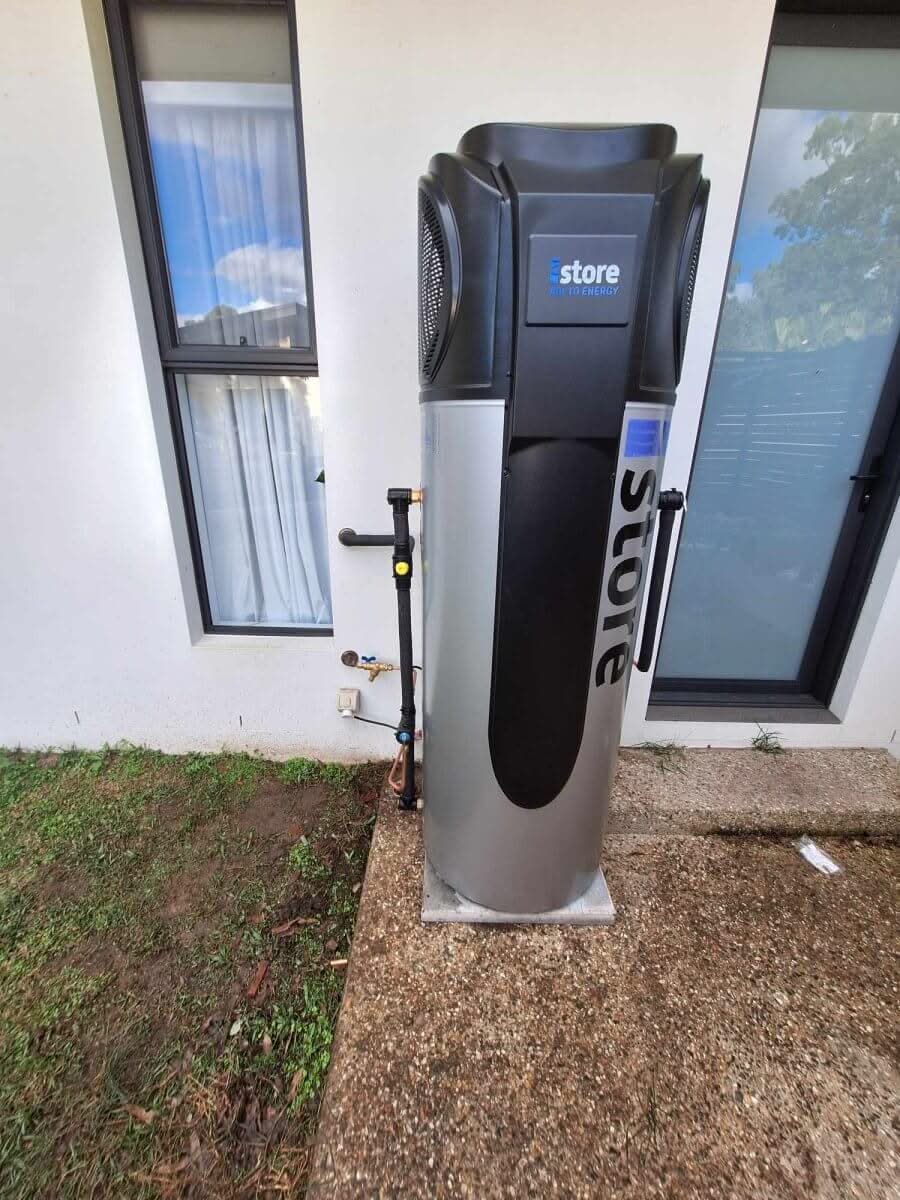
A heat pump is not a solar hot water system. It uses electricity to transfer heat from air into stored water. However, a heat pump may work well with rooftop solar PV if it is timed to run during solar generation hours.
Compare Heat Pump Hot Water Systems if roof-mounted solar hot water collectors do not suit your home.
Why solar hot water pricing varies
Solar hot water system pricing can vary because every property is different.
Price may be affected by:
-
Flat plate or evacuated tube collectors
-
Roof-mounted or split system design
-
Tank size
-
Booster type
-
Number of people in the home
-
Roof pitch
-
Roof material
-
Roof access
-
Roof orientation
-
Shading
-
Pipe run length
-
Electrical requirements
-
Gas booster requirements
-
Old system type
-
Old unit removal
-
Disposal
-
Site access
-
Compliance upgrades
-
Rebate eligibility
A home with easy roof access and good north-facing solar exposure may be more straightforward than a shaded, steep, multi-level or difficult-access property.
Flat plate solar hot water system cost
Flat plate solar hot water systems use flat collector panels to absorb heat from the sun.
They may suit:
-
Homes with good sun exposure
-
Roofs with suitable orientation
-
Households wanting a traditional solar hot water setup
-
Properties with enough roof space
-
Homes where the roof can safely support the collectors
-
Customers wanting a simpler solar collector design
Flat plate systems may be more affordable than some evacuated tube systems, but suitability depends on climate, roof conditions and household demand.
Evacuated tube solar hot water system cost
Evacuated tube systems use rows of glass tubes to capture solar heat. They are often compared for performance in varied conditions, but they can cost more upfront.
They may suit:
-
Homes comparing higher-performance solar hot water
-
Areas where colder or less consistent conditions need consideration
-
Properties with good collector placement
-
Customers wanting to compare solar efficiency options
-
Households with higher hot water demand
The higher upfront cost may be worthwhile for some homes, but it should be compared against total installation cost and alternatives such as heat pump hot water.
Rooftop solar hot water systems
A rooftop solar hot water system usually has the collectors and storage tank mounted on the roof.
This may suit some homes, but roof suitability matters.
Check:
-
Roof structure
-
Roof pitch
-
Roof material
-
Orientation
-
Shading
-
Access
-
Weight
-
Wind exposure
-
Plumbing route
-
Future maintenance access
-
Visual impact
A rooftop tank can add weight, so structural suitability should be confirmed before installation.
Split solar hot water systems
A split solar hot water system has collectors on the roof and the storage tank installed at ground level.
This may suit homes where a roof-mounted tank is not ideal.
A split system may help with:
-
Reducing roof weight
-
Easier tank access
-
Ground-level servicing
-
More flexible tank placement
-
Larger tank options
However, split systems can involve pumps, controls and additional pipework, which can affect installation cost and maintenance.
Active vs passive solar hot water systems
Solar hot water systems may be active or passive.
An active system uses a pump or controller to move water or heat-transfer fluid between collectors and the tank.
A passive system relies more on natural movement, gravity or thermosiphon principles.
The right type depends on:
-
Roof layout
-
Climate
-
Installation location
-
Tank position
-
Household demand
-
Budget
-
Maintenance preferences
-
Installer advice
The simplest system is not always the best system for every home.
Solar hot water system size
Sizing matters because solar hot water relies on stored hot water and available solar input.
Before choosing a system, consider:
-
Number of people in the home
-
Number of bathrooms
-
Shower habits
-
Bath use
-
Laundry use
-
Dishwasher use
-
Morning and evening demand
-
Cloudy weather backup
-
Tank size
-
Collector area
-
Booster capacity
-
Future household changes
A system that is too small may rely heavily on the booster. A system that is too large may cost more upfront than needed.
How much hot water does a household use?
Hot water use varies from home to home.
Key demand factors include:
-
Number of showers per day
-
Shower length
-
Shower rose flow rate
-
Bath use
-
Laundry habits
-
Dishwasher use
-
Number of occupants
-
Guest use
-
Rental or Airbnb occupancy
-
Peak morning and evening usage
Do not size a solar hot water system only from the number of people in the home. Usage habits matter just as much.
Roof orientation and solar access
Solar hot water systems need good solar exposure to perform well.
Before choosing solar hot water, check:
-
Roof orientation
-
Sun exposure
-
Shading from trees
-
Shading from nearby buildings
-
Roof pitch
-
Available roof space
-
Seasonal sun changes
-
Future tree growth
-
Whether collectors can face a suitable direction
In Australia, north-facing roof areas are often preferred where available, but a qualified installer should assess the specific property.
Roof material and structure
Roof material and structure can affect the installation cost.
Consider:
-
Metal roof
-
Tile roof
-
Steep roof pitch
-
Multi-storey access
-
Fragile roofing
-
Roof age
-
Structural capacity
-
Roof repairs needed before installation
-
Safety access requirements
If roof reinforcement or difficult access is required, the installation price can increase.
Shading issues
Shading can reduce solar hot water performance.
Common shading sources include:
-
Trees
-
Neighbouring buildings
-
Chimneys
-
Roof features
-
Solar PV panels
-
Antennas
-
Nearby structures
-
Seasonal sun angle changes
A shaded collector may reduce solar contribution and increase booster use, affecting running costs.
Booster type: electric or gas
Most solar hot water systems need a booster.
An electric booster may suit:
-
Homes without gas
-
Homes with suitable electrical setup
-
Properties using solar PV timing
-
Customers wanting an all-electric pathway
A gas booster may suit:
-
Homes already connected to natural gas or LPG
-
Customers replacing existing gas-boosted solar
-
Properties with suitable gas supply
-
Homes where gas booster performance suits usage
Natural gas and LPG are not interchangeable. Any gas booster must match the property’s gas type and be installed by a licensed gas fitter.
Solar hot water vs electric storage
Solar hot water and electric storage both use stored hot water, but the energy source is different.
Solar hot water may suit:
-
Homes with suitable roof space
-
Good sun exposure
-
Customers wanting reduced booster use
-
Properties with suitable roof and plumbing access
Electric storage may suit:
-
Homes needing a simpler like-for-like replacement
-
Units and townhouses
-
Homes without suitable roof space
-
Customers with tighter upfront budgets
-
Properties where solar collectors are impractical
Compare Electric Hot Water Systems if a solar installation is too complex or expensive.
Solar hot water vs gas hot water
Solar hot water and gas hot water suit different homes.
Solar hot water may suit:
-
Homes with good roof space and sunlight
-
Customers wanting solar contribution to water heating
-
Properties where a booster can be installed properly
-
Households with suitable budget and long-term plans
Gas hot water may suit:
-
Homes already connected to natural gas or LPG
-
Customers replacing existing gas storage or instant gas
-
Properties without suitable roof space
-
Homes needing a simpler gas replacement
-
Customers wanting compact instant gas hot water
Compare Gas Hot Water Systems and Instant Gas Hot Water Systems if solar is not practical.
Solar hot water vs heat pump: which is better?
Neither option is always better. It depends on the property.
Solar hot water may be better where:
-
Roof space is suitable
-
Sun exposure is strong
-
Shading is minimal
-
The customer wants solar collectors
-
Roof access and structure suit installation
-
Booster setup is practical
Heat pump hot water may be better where:
-
Roof space is limited
-
The home already has rooftop solar PV
-
Outdoor airflow is suitable
-
Condensate drainage is easy
-
Noise placement is acceptable
-
The customer wants an efficient electric system without roof collectors
If you already have rooftop solar PV, a heat pump timed to run during the day may be worth comparing.
Heat pump alternatives to solar hot water
Installed Today’s homepage-linked heat pump brand categories include:
When comparing heat pump alternatives, check:
-
Tank size
-
Recovery time
-
Outdoor location
-
Airflow
-
Condensate drainage
-
Electrical setup
-
Noise placement
-
Timer settings
-
Solar PV timing
-
Warranty terms
-
Total replacement cost
A heat pump can be a practical alternative where roof-mounted solar hot water is not suitable.
Solar hot water rebates and incentives
Solar hot water systems may be eligible for certificates, rebates or incentives depending on the product, location, installer and scheme rules.
However, rebate rules can change.
Before relying on any rebate, check:
-
Current eligibility
-
Product eligibility
-
Installer accreditation requirements
-
State or territory rules
-
Federal certificate rules where relevant
-
Documentation requirements
-
Whether the quote includes the rebate
-
Whether the rebate is applied upfront or claimed later
-
Whether the old system type affects eligibility
Do not choose a system only because of a rebate. The product still needs to suit the home.
STCs for solar hot water
Small-scale Technology Certificates, often called STCs, may reduce the upfront cost of eligible solar hot water or heat pump hot water systems.
The STC value can depend on:
-
Product type
-
Deeming zone
-
System performance
-
Installation date
-
Certificate market value
-
Installer process
-
Scheme rules
The value is not fixed forever, so customers should check current pricing and eligibility at the time of quoting.
Running cost expectations
Solar hot water can reduce booster energy use where the home has good sun exposure and the system is correctly sized.
Running costs may be affected by:
-
Sun exposure
-
Shading
-
Tank size
-
Collector size
-
Booster type
-
Number of people
-
Shower habits
-
Bath use
-
Laundry use
-
Climate
-
Maintenance
-
System age
-
Electricity or gas prices
Avoid assuming one fixed annual saving applies to every household.
Payback period
The payback period depends on upfront cost and ongoing savings.
Factors that affect payback include:
-
Installed price
-
Rebate amount
-
Existing system type
-
Energy prices
-
Household hot water use
-
Solar contribution
-
Booster use
-
Maintenance costs
-
System lifespan
-
Whether roof work was required
A cheaper system with poor suitability may not deliver a better result than a better-matched system with a higher upfront cost.
Maintenance costs
Solar hot water systems need maintenance over time.
Maintenance may include:
-
Collector inspection
-
Pump or controller checks where fitted
-
Valve checks
-
Booster checks
-
Roof flashing and mounting checks
-
Pipe insulation checks
-
Pressure relief valve checks
-
Anode checks where applicable
-
Tempering valve checks
-
General leak inspection
Maintenance requirements depend on system type, water quality, roof conditions and manufacturer instructions.
Warranty considerations
Before choosing a solar hot water system, check warranty terms carefully.
Review:
-
Collector warranty
-
Tank warranty
-
Booster warranty
-
Pump and controller warranty
-
Parts warranty
-
Labour coverage
-
Installation requirements
-
Maintenance requirements
-
Water quality exclusions
-
Roof installation exclusions
-
Proof of purchase
-
Service process
Warranty coverage does not mean every issue is automatically covered. Incorrect installation, poor maintenance, water quality, storm damage or missing documentation can affect claims.
Supply-only solar hot water considerations
Supply-only ordering can suit customers who already have their own licensed installer arranged.
For any supply-only hot water product, confirm:
-
Product suitability
-
Roof suitability
-
Booster requirements
-
Plumbing requirements
-
Electrical or gas requirements
-
Access
-
Delivery
-
Installation inclusions
-
Old unit removal
-
Disposal
-
Compliance requirements
Supply-only pricing generally does not include installation, valves, old unit removal, disposal, electrical work, gas work, pipework changes, drainage work, roof work or compliance upgrades unless clearly selected or included.
Supplied-and-installed options
Supplied-and-installed options may be available on selected products in eligible Brisbane and Gold Coast service areas where shown.
Before ordering any supplied-and-installed hot water option, check:
-
Service area eligibility
-
Existing system type
-
Installation inclusions
-
Electrical work
-
Gas work
-
Roof access
-
Valves
-
Old unit removal
-
Disposal
-
Pipework changes
-
Drainage
-
Access issues
-
Compliance upgrades
-
Product suitability
Do not assume every possible site requirement is included. Check the product page and selected options carefully.
Common mistake: choosing solar hot water without checking roof suitability
Solar hot water needs suitable roof space and sun exposure.
If the roof is shaded, steep, difficult to access or structurally unsuitable, installation can become more expensive or less effective.
Common mistake: confusing solar hot water with heat pump hot water
Solar hot water uses solar collectors to absorb sunlight.
Heat pump hot water uses electricity to transfer heat from the surrounding air.
Both can be efficient, but they are different systems with different installation requirements.
Common mistake: ignoring the booster
Solar hot water still needs a booster.
Check whether the booster is electric or gas, how it operates, and what it means for running costs.
Common mistake: relying only on rebates
Rebates and certificates can help reduce upfront cost, but they can change.
The system still needs to suit the home even without relying on a rebate.
Common mistake: ignoring maintenance
Solar hot water is not maintenance-free.
Collectors, valves, boosters, pumps, controls and tanks may all require checks over time.
Common mistake: comparing only upfront price
The cheapest quote may not include the same installation work, product quality, warranty or compliance requirements.
Compare:
-
System type
-
Collector type
-
Tank size
-
Booster type
-
Roof work
-
Installation inclusions
-
Warranty
-
Maintenance
-
Total installed cost
-
Long-term suitability
Common mistake: DIY solar hot water installation
Solar hot water installation involves plumbing, roof work, electrical or gas work, pressure control and compliance.
DIY installation can create:
-
Water leaks
-
Roof leaks
-
Electrical risks
-
Gas risks
-
Scalding risks
-
Warranty issues
-
Insurance problems
-
Non-compliant plumbing
-
Poor performance
-
Property damage
Use the right licensed professionals.
Final verdict: is solar hot water worth the price in 2024?
Solar hot water can be worth considering in 2024 for homes with strong sun exposure, suitable roof space, good collector placement and a long-term ownership plan. It can be a smart option where the roof, booster setup, installation cost and household demand all line up.
However, it is not the best choice for every home. If roof access is difficult, shading is an issue, upfront cost is too high or the household already has rooftop solar PV, a heat pump hot water system may be worth comparing.
Start with Heat Pump Hot Water Systems if you want an efficient electric alternative to solar hot water collectors. Compare Electric Hot Water Systems, Gas Hot Water Systems and Instant Gas Hot Water Systems if solar is not practical for your property.
The right hot water system is not just the one with the best advertised savings. It is the one that matches your roof, household demand, energy source, installation conditions, budget and long-term goals.
Long-tail FAQs
How much does a solar hot water system cost in 2024?
The price depends on the collector type, tank size, booster, roof access, installation complexity, rebates, old unit removal and any electrical, gas or plumbing work required.
Is solar hot water cheaper than electric hot water?
Solar hot water can reduce booster energy use where the home has good sun exposure and the system is correctly sized, but it usually costs more upfront than many standard electric storage replacements.
Is solar hot water cheaper than heat pump hot water?
It depends on the system, installation cost, roof work, rebates and household usage. Heat pump hot water may be more practical where roof-mounted solar collectors are not suitable.
What is the difference between solar hot water and heat pump hot water?
Solar hot water uses roof collectors to capture heat from the sun. Heat pump hot water uses electricity to transfer heat from surrounding air into stored water.
Do solar hot water systems need a booster?
Yes. Most solar hot water systems need an electric or gas booster for cloudy weather, high demand or low tank temperature.
Do solar hot water systems work on cloudy days?
They may still collect some heat, but performance can reduce. The booster helps maintain hot water supply when solar input is not enough.
Does solar hot water need a north-facing roof?
A suitable roof orientation helps performance. In Australia, north-facing roof space is often preferred, but a qualified installer should assess the exact property.
Are solar hot water rebates available?
Rebates, STCs or incentives may be available depending on product, location, installer and scheme rules. These can change, so check current eligibility before ordering.
Should I choose solar hot water or a heat pump?
Choose solar hot water if your roof and sun exposure suit collectors. Compare heat pump hot water if you have suitable outdoor space, airflow, drainage and electrical setup, especially if you already have rooftop solar PV.
Can I install solar hot water myself?
No. Solar hot water installation should be completed by licensed professionals. Plumbing, roof, electrical and gas work can create safety, warranty, insurance and compliance issues if done incorrectly.