
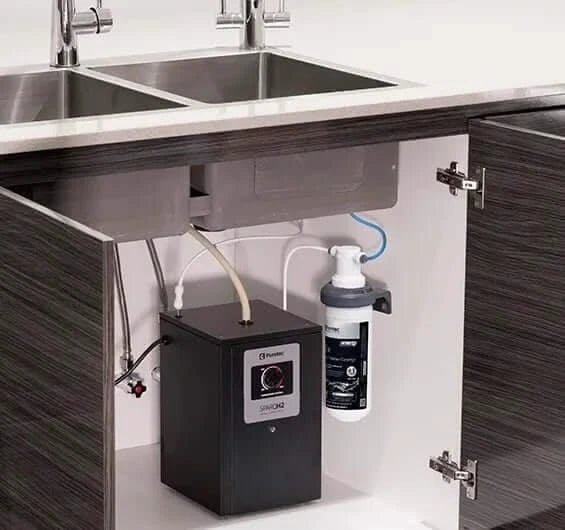
What Is Osmosis? How Water Movement Explains Reverse Osmosis Filters
Osmosis is one of the most important water movement processes in nature. It happens inside your body, inside plants, in food preservation, in medical settings and in water filtration technology.
It is also the science behind reverse osmosis water filters, one of the more advanced drinking water filtration options used in homes.
If you have ever wondered why plants wilt, why saltwater can dehydrate you, why raisins swell in water, or how a reverse osmosis filter separates cleaner drinking water from unwanted dissolved substances, osmosis is the process behind it.
This guide explains what osmosis is, how it works, why it matters, and how reverse osmosis water filtration uses pressure and membrane technology to help improve drinking water at home.
You can compare Reverse Osmosis, Drinking Water Filtration Systems, Kitchen Water Filter Systems, Puretec Water Filtration Systems, broader Water Filters and Water Filter Cartridges and Service Kits online with Installed Today.
Quick answer: what is osmosis?
Osmosis is the movement of water through a semipermeable membrane from a side with lower dissolved substance concentration to a side with higher dissolved substance concentration.
In simple terms, water moves toward the saltier, sweeter or more concentrated side to help balance the difference.
The key parts of osmosis are:
-
Water
-
A semipermeable membrane
-
Dissolved substances, also called solutes
-
Different concentrations on each side
-
Water movement toward the more concentrated side
Osmosis does not need added energy. It is a passive movement of water driven by concentration difference.
What is a semipermeable membrane?
A semipermeable membrane is a barrier that lets some things pass through while blocking others.
In osmosis, the membrane usually allows water molecules to pass through while restricting larger dissolved particles.
Examples include:
-
Cell membranes
-
Plant root cell membranes
-
Egg membranes used in science experiments
-
Synthetic reverse osmosis membranes
-
Special filtration membranes used in water treatment
A membrane is important because osmosis cannot happen in the same way without a barrier separating two different concentrations.
How osmosis works
Osmosis happens when there is a concentration difference across a semipermeable membrane.
Imagine one side of the membrane has mostly water and only a small amount of dissolved salt. The other side has more salt and less available water.
Water naturally moves through the membrane toward the saltier side.
This movement continues until the system moves closer to balance, although in real life perfect balance may not always be reached because pressure, membrane limits and ongoing movement affect the process.
Osmosis in simple steps
A simple osmosis process looks like this:
-
Two solutions sit on opposite sides of a semipermeable membrane
-
One side has a lower solute concentration
-
The other side has a higher solute concentration
-
Water moves through the membrane toward the higher solute side
-
The movement helps dilute the more concentrated side
-
Water movement slows as balance improves
The important point is that water moves toward the side with more dissolved substances.
What are solutes?
Solutes are substances dissolved in water.
Common solutes include:
-
Salt
-
Sugar
-
Minerals
-
Nutrients
-
Ions
-
Dissolved solids
-
Some chemicals
-
Organic compounds
In osmosis, solute concentration matters because water moves toward the side with more dissolved material.
Osmosis vs diffusion
Osmosis and diffusion are related, but they are not the same.
| Process | What moves | Membrane needed? | Example |
|---|---|---|---|
| Osmosis | Water | Yes, semipermeable membrane | Water moving into plant roots |
| Diffusion | Molecules or particles | Not always | Perfume smell spreading through a room |
Diffusion is the general movement of particles from higher concentration to lower concentration.
Osmosis is specifically the movement of water through a semipermeable membrane.
What is osmotic pressure?
Osmotic pressure is the pressure related to water movement through a semipermeable membrane.
When water wants to move toward a more concentrated solution, pressure can build up. The stronger the concentration difference, the more pressure may be needed to stop or reverse that movement.
This idea matters because reverse osmosis water filters use pressure to push water in the opposite direction to natural osmosis.
Isotonic, hypotonic and hypertonic solutions
Osmosis is often explained using three types of solutions.
| Solution type | What it means | Effect on cells |
|---|---|---|
| Isotonic | Balanced solute concentration | Cell stays roughly the same |
| Hypotonic | Lower solute outside the cell | Water moves into the cell |
| Hypertonic | Higher solute outside the cell | Water moves out of the cell |
This is why water movement can cause cells to swell, shrink or stay balanced depending on the surrounding solution.
Real-life osmosis example: raisins in water
A raisin is a simple example of osmosis.
When a raisin is placed in water, water moves into the raisin through its outer membrane because the inside has a higher concentration of dissolved sugars and other substances.
As water enters, the raisin swells.
This is osmosis in action.
Real-life osmosis example: plants absorbing water
Plants rely on osmosis to move water from the soil into root cells.
Water moves into plant roots when the concentration inside the root cells draws water in from the surrounding soil.
This helps plants:
-
Stay firm
-
Transport nutrients
-
Maintain turgor pressure
-
Support leaves and stems
-
Keep cells hydrated
When plants do not get enough water, they lose turgor pressure and wilt.
Real-life osmosis example: saltwater and dehydration
Seawater is dangerous to drink because it contains a high concentration of salt.
If you drink seawater, the high salt concentration can pull water out of cells as the body tries to manage the extra salt load.
This can worsen dehydration instead of fixing it.
That is why desalination technology, including reverse osmosis, is used to separate drinking water from seawater in some applications.
Real-life osmosis example: food preservation
Salt and sugar can preserve food partly because they create a high-solute environment.
This can draw water out of microorganisms and reduce the water available for growth.
Examples include:
-
Salt curing
-
Sugar preserving
-
Drying fruit
-
Pickling
-
Brining
-
Jam making
Osmosis helps explain why these methods can slow spoilage.
Real-life osmosis example: medical fluids
Medical fluids such as IV solutions need careful balance.
If a fluid is too concentrated or too diluted compared with blood, it can affect how water moves in and out of cells.
This is why medical fluids are carefully formulated and should only be used under proper healthcare supervision.
How osmosis connects to home water filtration
Osmosis explains how water moves naturally across a membrane.
Reverse osmosis takes that idea and uses pressure to push water through a special membrane in the opposite direction.
This makes reverse osmosis useful for drinking water filtration because the membrane can help reduce many dissolved substances that standard sediment or carbon filters may not target in the same way.
That is why Reverse Osmosis systems are often compared by customers wanting more advanced drinking water filtration at the kitchen sink.
What is reverse osmosis?
Reverse osmosis, often shortened to RO, is a filtration process that uses pressure to push water through a semipermeable membrane.
The membrane allows water through while helping reduce many dissolved substances.
A typical reverse osmosis system may include:
-
Sediment pre-filter
-
Carbon pre-filter
-
Reverse osmosis membrane
-
Storage tank on many systems
-
Post-filter
-
Dedicated drinking water tap
-
Drain connection
-
Optional remineralisation stage on some systems
Reverse osmosis is mainly used for drinking and cooking water, not usually whole home filtration.
How reverse osmosis works
Reverse osmosis works by applying pressure to water on the more concentrated side of a membrane.
This pressure pushes water through the membrane and leaves many unwanted dissolved substances behind.
A simple RO process looks like this:
-
Water enters the filtration system
-
Pre-filters reduce sediment, chlorine taste and other selected impurities depending on the system
-
Pressure pushes water through the RO membrane
-
Filtered water is stored or delivered to the tap
-
Concentrated reject water goes to drain
-
Post-filtration may polish taste before drinking
The exact process depends on the RO system design.
Osmosis vs reverse osmosis
Osmosis and reverse osmosis move water in different ways.
| Feature | Osmosis | Reverse osmosis |
|---|---|---|
| Direction | Natural water movement toward higher solute concentration | Pressure pushes water through the membrane |
| Energy | Passive process | Requires water pressure |
| Main use | Biological and natural water balance | Drinking water filtration and desalination |
| Membrane | Semipermeable membrane | Special RO membrane |
| Result | Helps balance concentration | Helps separate water from selected dissolved substances |
Reverse osmosis is not just normal osmosis. It is osmosis in reverse using pressure.
Why reverse osmosis is used for drinking water
Reverse osmosis is commonly used where the goal is more advanced drinking water filtration.
It may suit customers wanting to reduce selected:
-
Dissolved solids
-
Salts
-
Minerals
-
Chlorine taste and odour when pre-filtration is included
-
Some metals depending on system and water chemistry
-
Some chemical contaminants depending on system design
-
Taste issues
-
Odour issues
No water filter should be treated as a universal fix for every possible water problem. The system needs to match the water source and filtration goal.
Reverse osmosis vs standard drinking water filters
A standard drinking water filter and a reverse osmosis system are not the same.
| Feature | Standard drinking water filter | Reverse osmosis system |
|---|---|---|
| Main filtration method | Often sediment and carbon filtration | Multi-stage filtration with RO membrane |
| Common use | Taste, odour and selected impurity reduction | More advanced drinking water filtration |
| Drain connection | Usually not required | Usually required |
| Storage tank | Usually not required | Often included |
| Maintenance | Cartridge replacement | Cartridges plus membrane maintenance |
| Installation | Often simpler | More complex |
| Best suited to | Everyday taste improvement | Customers wanting RO-level filtration |
For many homes, a standard Drinking Water Filtration System may be enough. Reverse osmosis may suit homes with more specific drinking water goals.
Reverse osmosis vs kitchen water filters
Kitchen Water Filter Systems are usually installed under or around the kitchen sink to improve drinking and cooking water.
Some kitchen filters are simple cartridge systems. Others may be reverse osmosis systems.
Kitchen filters may suit:
-
Drinking water
-
Cooking water
-
Tea and coffee
-
Bottle filling
-
Family kitchens
-
Units and townhouses
-
Homes that do not need whole home filtration
Reverse osmosis is a specific type of kitchen drinking water filtration, not the only option.
Reverse osmosis vs whole home filtration
Whole Home Water Filtration filters water at the main incoming water line before it reaches taps, showers, bathrooms, laundries and appliances.
Reverse osmosis is usually installed for drinking water only.
| Feature | Reverse osmosis | Whole home filtration |
|---|---|---|
| Main location | Kitchen sink | Main incoming water line |
| Main use | Drinking and cooking water | Water across the house |
| Flow demand | One drinking water outlet | Whole-house demand |
| Drain connection | Usually required | Usually not the same setup |
| Maintenance | Cartridges and membrane | Larger cartridges |
| Best for | More advanced drinking water filtration | Broader household filtration |
Many homes use whole home filtration for general water quality and a kitchen drinking water filter for drinking water.
Reverse osmosis and Puretec water filters
Puretec Water Filtration Systems include a range of water filtration options, including drinking water, kitchen, whole home, reverse osmosis, UV and cartridge systems.
Puretec may suit customers wanting:
-
Drinking water filtration
-
Kitchen water filtration
-
Reverse osmosis systems
-
Whole home filtration
-
UV treatment
-
Tank water filtration
-
Replacement cartridges
-
Service kits
-
Water quality testing support
Always match the Puretec system to your water source and filtration goal. A cartridge that suits town water taste improvement may not suit rainwater, bore water or microbiological treatment.
Does reverse osmosis remove minerals?
Reverse osmosis can reduce many dissolved minerals along with other dissolved substances.
For some customers, this is part of the appeal. For others, reduced mineral content can affect taste.
Some RO systems may include a remineralisation stage to improve taste or add selected minerals back into the water.
Before choosing reverse osmosis, check:
-
Whether remineralisation is included
-
Cartridge replacement requirements
-
Membrane replacement requirements
-
Flow rate
-
Water pressure
-
Storage tank size
-
Taste preference
-
Drinking water goals
Does reverse osmosis make water alkaline?
Not usually by default.
A standard reverse osmosis membrane does not automatically make water alkaline. In fact, RO can reduce mineral content unless a remineralisation or alkaline stage is included.
If you want alkaline-style drinking water, check whether the system includes:
-
Remineralisation
-
Alkaline cartridge
-
pH adjustment stage
-
Mineral cartridge
-
Manufacturer pH guidance
Do not assume every RO system produces alkaline water.
Does reverse osmosis need a drain?
Most reverse osmosis systems need a drain connection because the system separates filtered water from reject water.
The reject stream carries concentrated dissolved substances away from the membrane.
Before choosing RO, check:
-
Under-sink space
-
Drain access
-
Storage tank space
-
Filter cartridge access
-
Tap location
-
Water pressure
-
Cabinet layout
-
Installation requirements
A reverse osmosis system is usually more involved than a simple under-sink carbon filter.
Does reverse osmosis waste water?
Reverse osmosis systems produce a filtered water stream and a reject water stream.
This is part of the membrane separation process.
The amount of reject water depends on:
-
System design
-
Water pressure
-
Membrane condition
-
Water temperature
-
Cartridge condition
-
Feed water quality
-
System efficiency
-
Maintenance
If water efficiency is important to you, compare the exact system specifications before ordering.
Is reverse osmosis worth it?
Reverse osmosis can be worth it if you want more advanced drinking water filtration and your kitchen setup suits the installation requirements.
It may suit:
-
Customers wanting RO-level drinking water filtration
-
Homes with taste or dissolved solids concerns
-
Customers using town water who want more advanced filtration
-
Some tank or rainwater setups where proper pre-treatment is included
-
Households with enough under-sink space
-
Customers prepared for ongoing cartridge and membrane maintenance
It may not be necessary if you only want to improve chlorine taste and odour. A standard kitchen drinking water filter may be enough.
When a standard drinking water filter may be enough
A standard drinking water filter may be enough if your main concerns are:
-
Better taste
-
Chlorine taste
-
Chlorine odour
-
Everyday kitchen drinking water
-
Tea and coffee water
-
Bottle filling
-
Lower bottled water use
-
Simple cartridge maintenance
Start with Drinking Water Filtration Systems or Kitchen Water Filter Systems if your filtration needs are straightforward.
When whole home filtration may be better
Whole home filtration may be better if the issue affects more than drinking water.
It may suit homes with:
-
Sediment at multiple taps
-
Chlorine taste and odour throughout the home
-
Shower water concerns
-
Laundry water concerns
-
Whole-house water quality goals
-
Larger family water use
-
Multiple bathrooms
-
Main-line filtration needs
Compare Whole Home Water Filtration if the goal is broader than the kitchen sink.
When UV filtration may be needed
UV Water Filter Systems may suit rainwater, tank water, bore water or private water supplies where microbiological treatment is needed.
UV is different from reverse osmosis.
UV uses ultraviolet light to treat water as it passes through the chamber. It usually needs clear water and sediment pre-filtration to work properly.
UV may be relevant for:
-
Rainwater tanks
-
Rural properties
-
Tank water homes
-
Private water supplies
-
Properties where bacteria or microorganisms are a concern
Water testing is often a smart starting point for tank or private water supplies.
Water quality testing before choosing a filter
A Water Quality Test Kit can help when you are unsure what you are trying to filter.
Testing may be useful for:
-
Rainwater tanks
-
Bore water
-
Rural properties
-
Visible sediment
-
Unusual taste
-
Unusual odour
-
Private water supplies
-
Customers considering UV
-
Customers comparing RO vs standard filtration
-
Homes with unknown water quality issues
Testing helps avoid buying the wrong filter for the problem.
Common mistake: thinking osmosis and reverse osmosis are the same
Osmosis is natural water movement through a membrane.
Reverse osmosis uses pressure to push water through a membrane in the opposite direction.
They are related, but they are not identical.
Common mistake: assuming RO removes everything
Reverse osmosis is advanced, but no single filter should be treated as removing every possible contaminant in every situation.
System performance depends on:
-
Water source
-
Membrane quality
-
Pre-filters
-
Water pressure
-
Maintenance
-
Cartridge condition
-
Installation quality
-
Contaminant type
-
Manufacturer specifications
Choose based on the water issue, not the name alone.
Common mistake: ignoring pre-filtration
Reverse osmosis membranes usually need pre-filtration.
Pre-filters can help protect the membrane from sediment, chlorine and other substances depending on the system design.
Skipping or delaying cartridge changes can reduce performance and membrane life.
Common mistake: ignoring water pressure
RO systems need suitable water pressure to operate properly.
Low pressure can affect:
-
Flow rate
-
Tank refill time
-
Reject water ratio
-
System performance
-
User experience
Check pressure requirements before ordering.
Common mistake: forgetting about cartridge replacement
Reverse osmosis systems need maintenance.
Ongoing maintenance may include:
-
Sediment cartridge replacement
-
Carbon cartridge replacement
-
RO membrane replacement
-
Post-filter replacement
-
Remineralisation cartridge replacement where fitted
-
Leak checks
-
Tank checks
-
Flow checks
A filter is only effective when maintained properly.
Common mistake: choosing RO when a simpler filter would do
Reverse osmosis can be excellent for the right application, but it is not always necessary.
If your water is safe and your main issue is taste or chlorine odour, a simpler drinking water filter may be a better match.
Common mistake: choosing the wrong filter for tank water
Tank water can need different treatment from town water.
Depending on the property, tank water may require:
-
Sediment filtration
-
Carbon filtration
-
UV treatment
-
Pump setup checks
-
Water testing
-
Proper pre-filtration
-
Ongoing maintenance
Do not assume a single under-sink RO system solves every tank water issue.
Common mistake: DIY installation where professional work is needed
Some cartridge replacements may be simple, but installing a water filtration system can involve plumbing, pressure control, drain connections, tap installation, electrical power for UV and compliance requirements.
Incorrect installation can cause:
-
Leaks
-
Cabinet damage
-
Low water pressure
-
Poor filtration performance
-
Drainage issues
-
Water damage
-
Warranty problems
-
Non-compliant work
Use a suitable licensed professional where required.
Supply-only reverse osmosis systems
Supply-only ordering can suit customers who already have their own plumber or installer arranged.
Supply only may suit:
-
Homeowners managing their own installation
-
Builders
-
Renovators
-
Property managers
-
Trade customers
-
Customers outside supplied-and-installed service areas
Supply-only pricing generally does not include installation, fittings, valves, drilling, cabinetry changes, drain connection, pipework changes, pressure control, electrical work or compliance upgrades unless clearly selected or included.
Before ordering supply only, your installer should confirm the system suits the water source, pressure, cupboard space, drain access and filtration goal.
Supplied-and-installed water filtration options
Supplied-and-installed options may be available on selected water filtration products in eligible Brisbane and Gold Coast service areas where shown.
Before ordering supplied and installed, check:
-
Service area eligibility
-
Water source
-
Installation location
-
Under-sink space
-
Drain connection
-
Tap requirements
-
Water pressure
-
Pipework changes
-
Cabinet access
-
Cartridge replacement access
-
Electrical requirements for UV systems
-
Any extra work required
Do not assume every possible site requirement is included. Check the selected product and installation options carefully.
Final verdict: why osmosis matters when choosing a water filter
Osmosis is the natural movement of water through a semipermeable membrane toward a more concentrated solution. It helps explain plant health, cell balance, food preservation, dehydration and many biological processes.
Reverse osmosis uses the same membrane principle in a different way. By applying pressure, an RO system pushes water through a specialised membrane to help reduce many dissolved substances from drinking water.
For homeowners, the practical takeaway is simple: choose your water filter based on your actual water source and filtration goal.
Choose Reverse Osmosis if you want more advanced drinking water filtration and your kitchen setup suits the installation requirements.
Choose Drinking Water Filtration Systems or Kitchen Water Filter Systems if you mainly want better tasting water at the kitchen tap.
Choose Whole Home Water Filtration if you want water filtered before it reaches taps, showers, laundries and appliances.
Choose UV Water Filter Systems where microbiological treatment is required as part of a properly designed setup.
Choose a Water Quality Test Kit if you are unsure what is in your water.
The best water filter is not always the most advanced system. It is the one that matches your water source, pressure, flow rate, installation location, maintenance expectations and drinking water goals.
Long-tail FAQs
What is osmosis in simple words?
Osmosis is the movement of water through a semipermeable membrane toward the side with more dissolved substances.
What is a real-life example of osmosis?
A raisin swelling in water is a simple example. Water moves into the raisin because the inside has a higher concentration of dissolved substances.
Why can’t people drink seawater?
Seawater has a high salt concentration. Drinking it can make dehydration worse because the body has to deal with the extra salt load.
What is the difference between osmosis and diffusion?
Diffusion is the movement of particles from high concentration to low concentration. Osmosis is specifically the movement of water through a semipermeable membrane.
What is reverse osmosis?
Reverse osmosis is a filtration process that uses pressure to push water through a semipermeable membrane, helping reduce many dissolved substances from drinking water.
Is reverse osmosis the same as osmosis?
No. Osmosis is natural water movement through a membrane. Reverse osmosis uses pressure to push water through the membrane in the opposite direction.
Does reverse osmosis remove minerals?
Reverse osmosis can reduce many dissolved minerals. Some RO systems include remineralisation stages to improve taste or add selected minerals back.
Does reverse osmosis make water alkaline?
Not usually by default. A reverse osmosis system needs a remineralisation or alkaline stage if higher-pH water is the goal.
Do I need reverse osmosis or a normal water filter?
Choose reverse osmosis if you want more advanced drinking water filtration. Choose a standard drinking water filter if your main goal is better taste, chlorine taste and odour reduction, or everyday kitchen water filtration.
Should I test my water before buying a filter?
Testing is useful if you have rainwater, bore water, visible sediment, unusual taste, odour issues or an unknown water source. A test kit can help guide the right filtration choice.