
270L vs 315L Heat Pump Hot Water: Which Size Should You Choose?
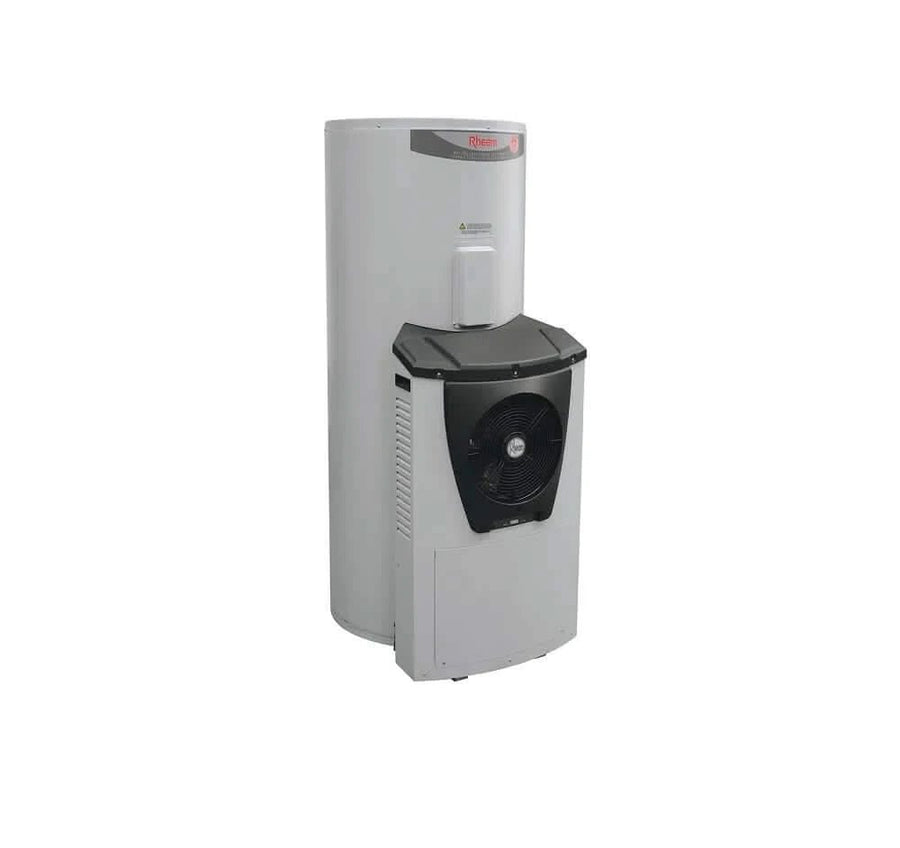
A 270L or 315L heat pump hot water system is usually considered for family homes, higher hot water use, and households wanting efficient electric hot water with enough stored capacity to get through busy shower periods.
Both sizes can work well, but they suit different homes. A 270L heat pump may be enough for many standard family households. A 315L heat pump gives more stored hot water and can be the safer choice where there are more people, longer showers, regular guests, baths or limited heating windows.
This guide compares 270L vs 315L heat pump hot water systems, explains who each size suits, and covers the key installation checks before ordering.
Quick answer: 270L vs 315L heat pump hot water
| Heat pump size | Best suited to | Main risk |
|---|---|---|
| 270L heat pump | 3–5 people with moderate-to-normal family use | May be tight for larger or high-use households |
| 315L heat pump | 5+ people, higher use, larger homes or more storage buffer | May be more than needed for smaller households |
For many homes, a 270L heat pump hot water system is a good family-size option. A 315L heat pump hot water system is usually better where the household has higher demand, back-to-back showers, regular guests, baths, or a solar-timer setup that needs more stored hot water.
You can compare current options in Heat Pump Hot Water Systems or browse all Hot Water Systems.
What is a 270L heat pump hot water system?
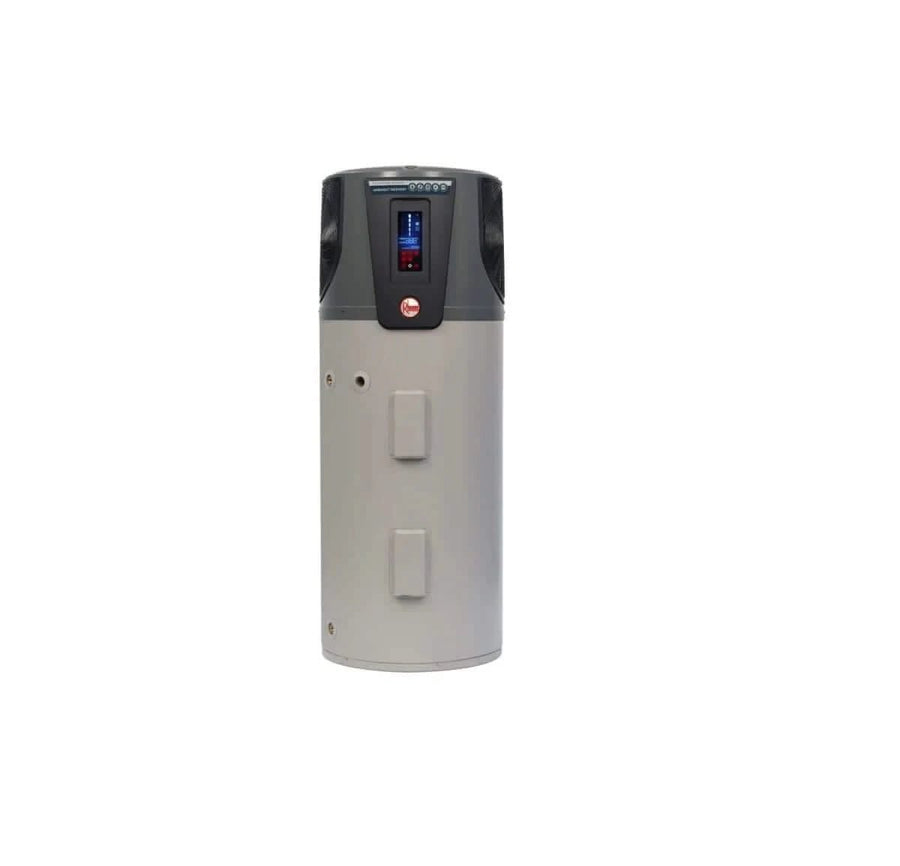
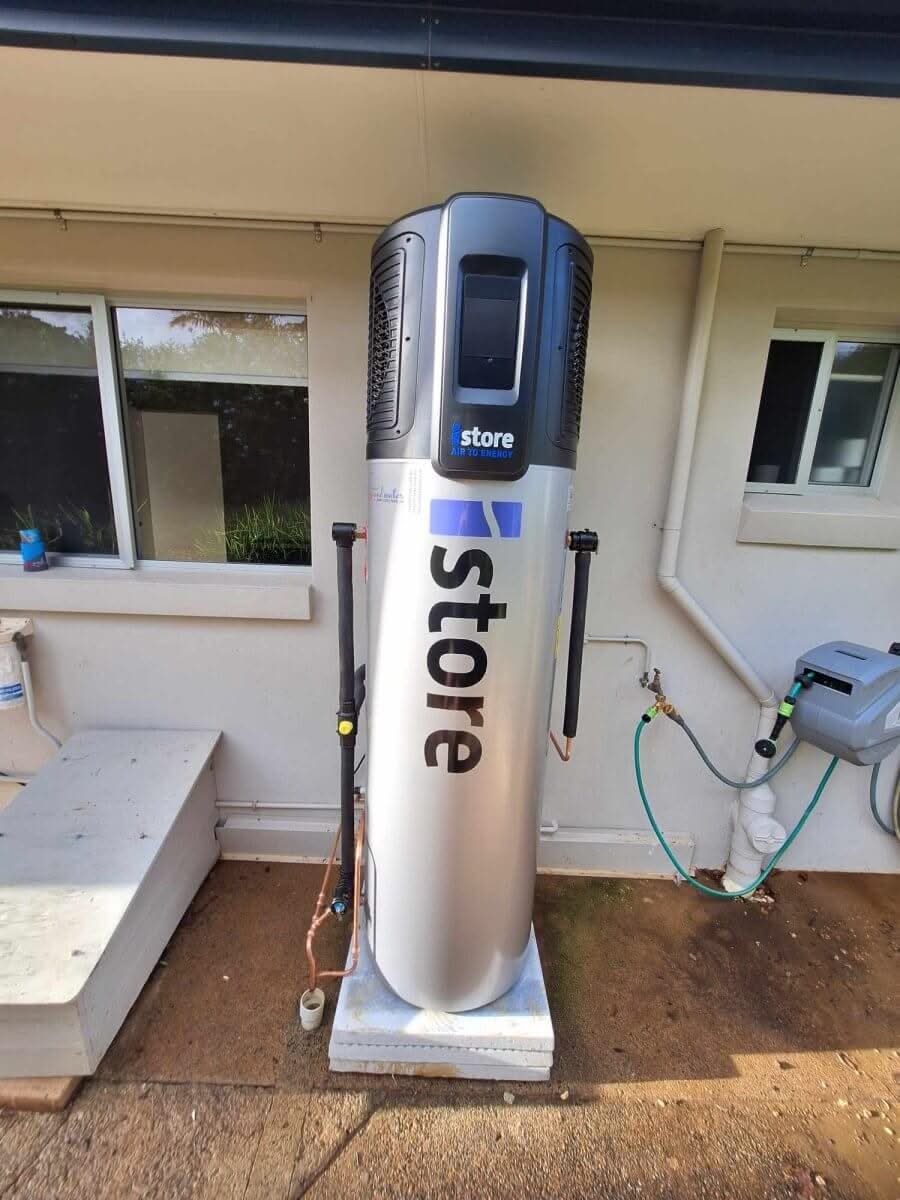
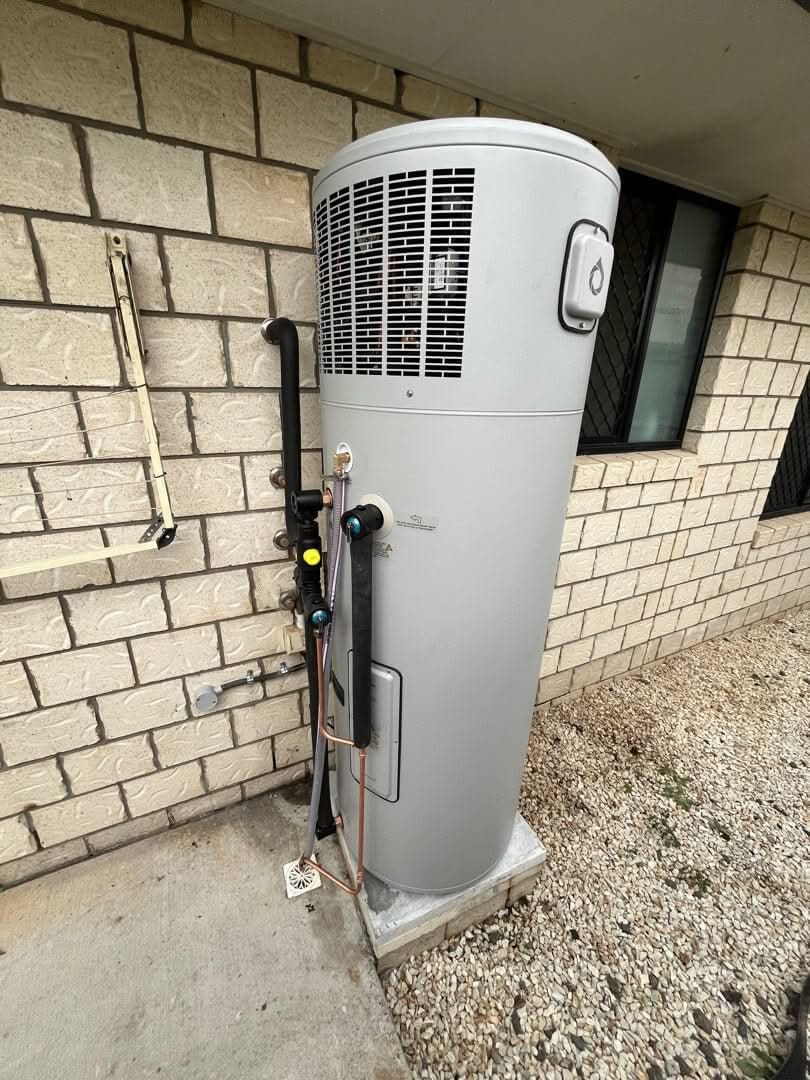
A 270L heat pump hot water system stores hot water in a tank and uses heat pump technology to heat the water more efficiently than a standard electric resistance element.
A 270L heat pump is commonly considered for:
-
3–5 person households
-
Standard family homes
-
Homes replacing electric storage systems
-
Moderate shower use
-
Homes with solar power and daytime heating potential
-
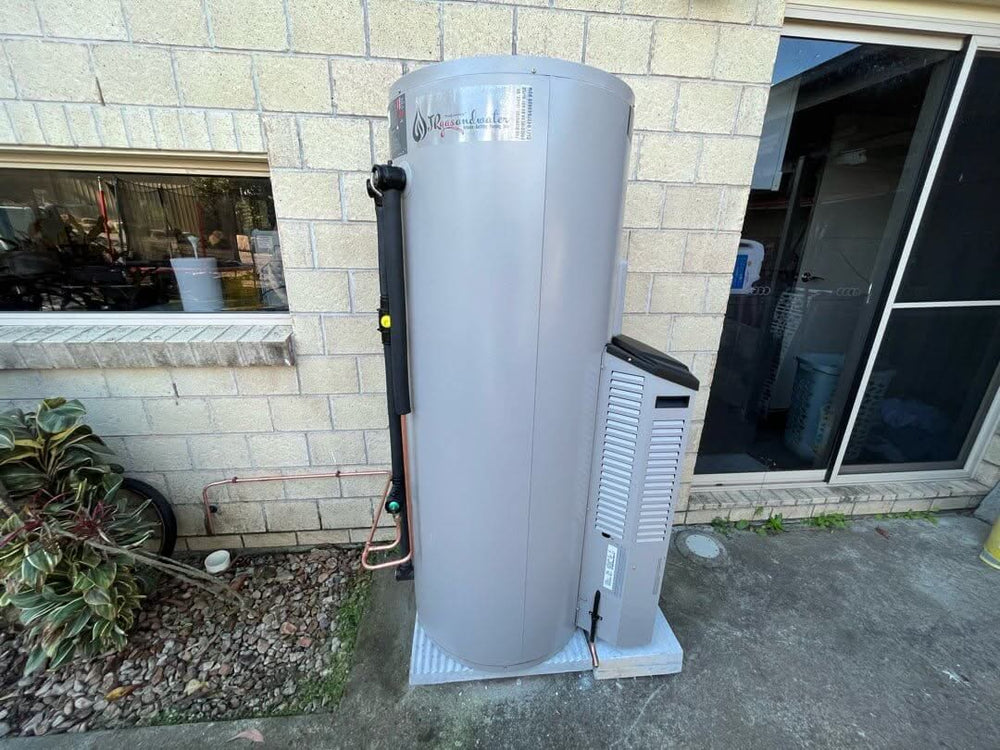
Properties with suitable outdoor space, drainage and airflow
-
Homes wanting more capacity than smaller 180L, 220L or 250L units
A 270L system can work well when the household’s hot water demand is reasonable and the system has enough time to recover.
What is a 315L heat pump hot water system?
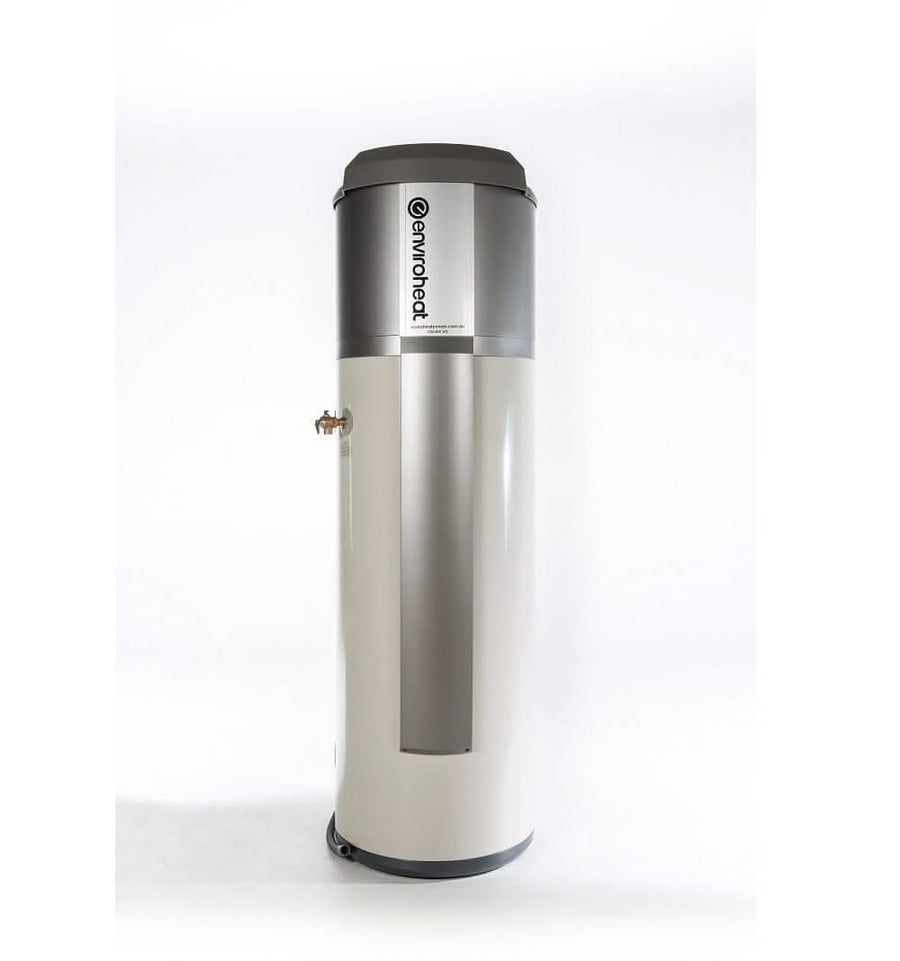
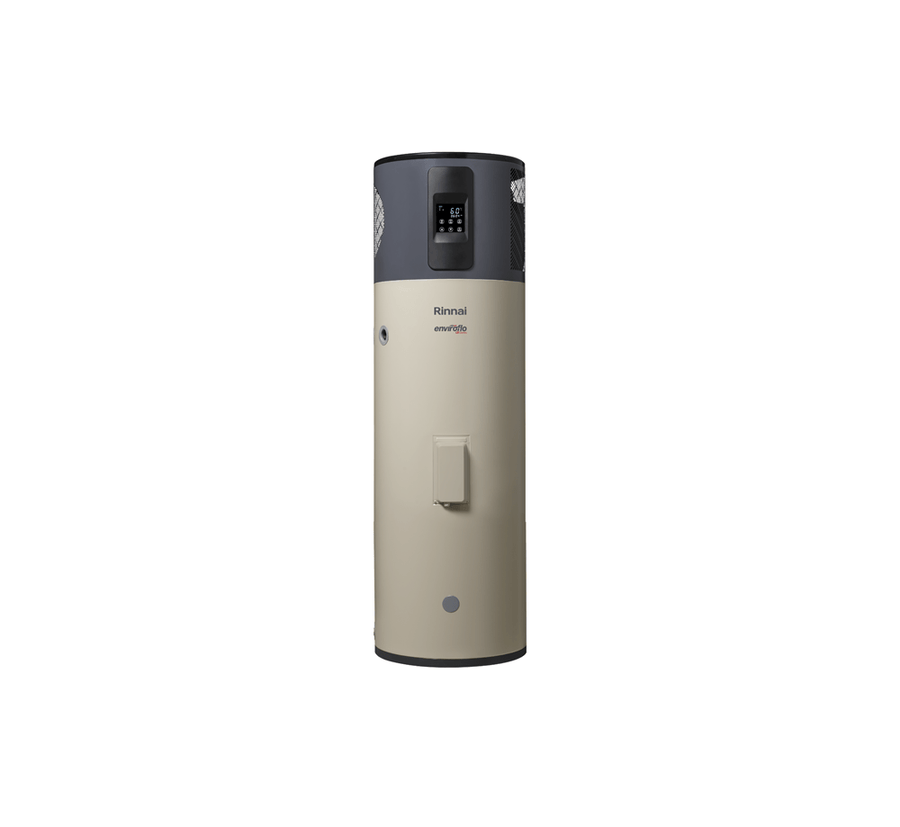
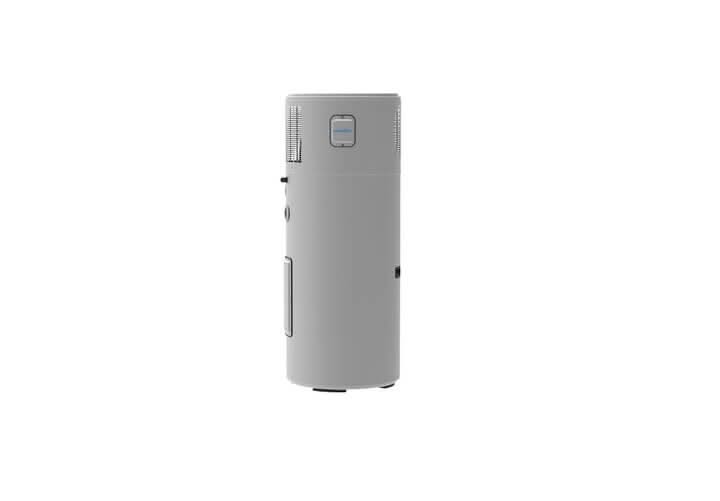
A 315L heat pump hot water system stores more hot water than a 270L unit. The larger tank gives more buffer during peak use and can help households that need more stored hot water between heating cycles.
A 315L heat pump is commonly considered for:
-
Larger family homes
-
5+ person households
-
Homes with teenagers
-
Regular back-to-back showers
-
Homes with baths
-
Properties with regular guests
-
Homes using solar-timed heating
-
Households that previously ran out with a smaller system
A 315L heat pump is often chosen when the household wants more hot water security rather than choosing the smallest possible tank.
270L vs 315L heat pump comparison
| Feature | 270L heat pump | 315L heat pump |
|---|---|---|
| Stored hot water | Lower | Higher |
| Best for | 3–5 people | 5+ people or higher use |
| Family suitability | Good for normal family use | Better for larger families |
| Back-to-back showers | Good | Better |
| Bath use | Limited to moderate | Better |
| Solar timer setup | Good | More forgiving |
| Running out risk | Higher than 315L | Lower |
| Space required | Usually less | Usually more |
| Best replacement use | Standard family household | Larger or higher-use household |
| Site checks required | Yes | Yes |
How many people can a 270L heat pump support?
A 270L heat pump hot water system may suit:
-
3-person homes with normal-to-high use
-
4-person homes with normal use
-
Some 5-person homes with moderate shower habits
-
Homes without frequent large bath use
-
Properties where hot water use is spread out
-
Homes with good airflow and recovery conditions
-
Households wanting a family-size heat pump without going larger
A 270L heat pump may be too small if:
-
Five or more people take long showers
-
Several showers happen close together
-
A large bath is used regularly
-
Guests often stay at the home
-
The system is restricted to a short heating window
-
The previous similar-size system regularly ran out
How many people can a 315L heat pump support?
A 315L heat pump hot water system may suit:
-
5+ person households
-
Larger family homes
-
Homes with teenagers
-
Homes with two bathrooms
-
Regular back-to-back shower use
-
Homes with baths
-
Solar-timer setups needing more stored hot water
-
Properties where running out is a major concern
A 315L system may be more than needed if:
-
Only one or two people live in the home
-
Hot water use is low
-
The old smaller system already performed well
-
Space is limited
-
Access is difficult
-
A smaller heat pump would comfortably meet demand
The goal is not always to buy the biggest tank. The right size should match the household’s actual hot water demand and the site conditions.
Why the extra capacity matters
The difference between 270L and 315L is more noticeable in busy households.
Extra stored hot water can help when:
-
Multiple showers happen back-to-back
-
Teenagers take longer showers
-
Baths are used
-
Guests stay regularly
-
The heat pump is set to run mostly during solar production hours
-
The household wants to reduce overnight heating
-
The system has less time to recover between peak periods
A 315L heat pump gives more buffer. That does not mean every home needs it, but it can make sense where the household is close to the limit of a 270L system.
Heat pump recovery is different to standard electric storage
Heat pump hot water systems do not recover exactly the same way as standard electric storage systems.
A standard electric storage system mainly uses an electric element to heat the water. A heat pump uses refrigeration technology to move heat from the surrounding air into the water. This can be efficient, but performance depends on the model, location, airflow and settings.
Recovery can be affected by:
-
Air temperature
-
Airflow around the unit
-
Tank size
-
Heat pump compressor capacity
-
Timer settings
-
Solar timing
-
Boost element settings
-
Household peak demand
-
Installation location
-
Maintenance and filter access where applicable
This is why correct sizing and placement matter. A poorly placed heat pump may perform worse than expected, even if the tank size looks suitable.
Solar timing and tank size
Many households with solar power want the heat pump to run during the day. This can help use solar generation, but it also means the tank needs enough stored hot water to last through evening and morning demand.
| Setup | Sizing consideration |
|---|---|
| Daytime solar heating | Tank needs enough storage for evening and morning use |
| Short timer window | Larger storage may be safer |
| 24-hour operation | More flexible recovery, but may use power outside solar hours |
| Overnight heating | May improve morning recovery but uses grid power unless offset |
| Boost element enabled | Can help recovery but may increase electricity use |
A 315L heat pump may be more forgiving than a 270L system when heating is limited to a daytime solar window.
Airflow is critical
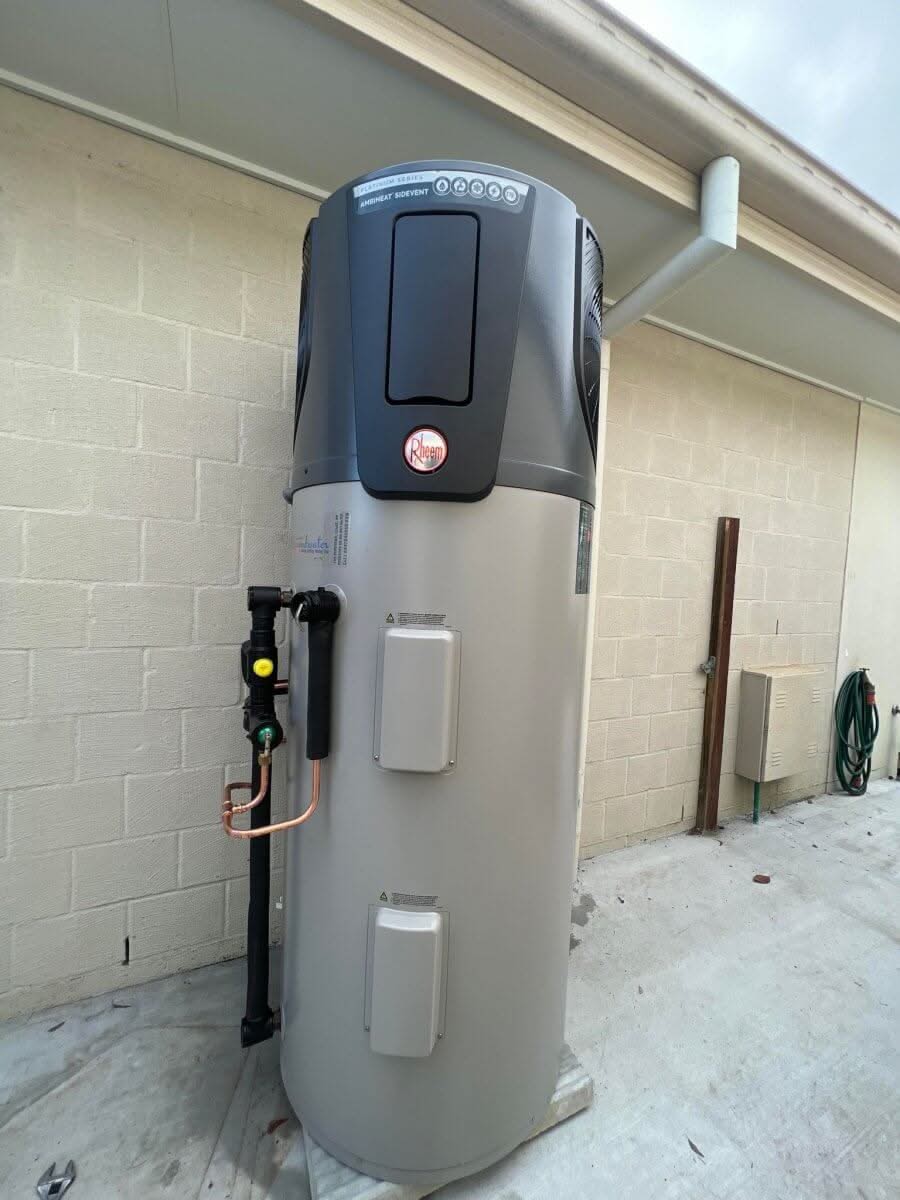
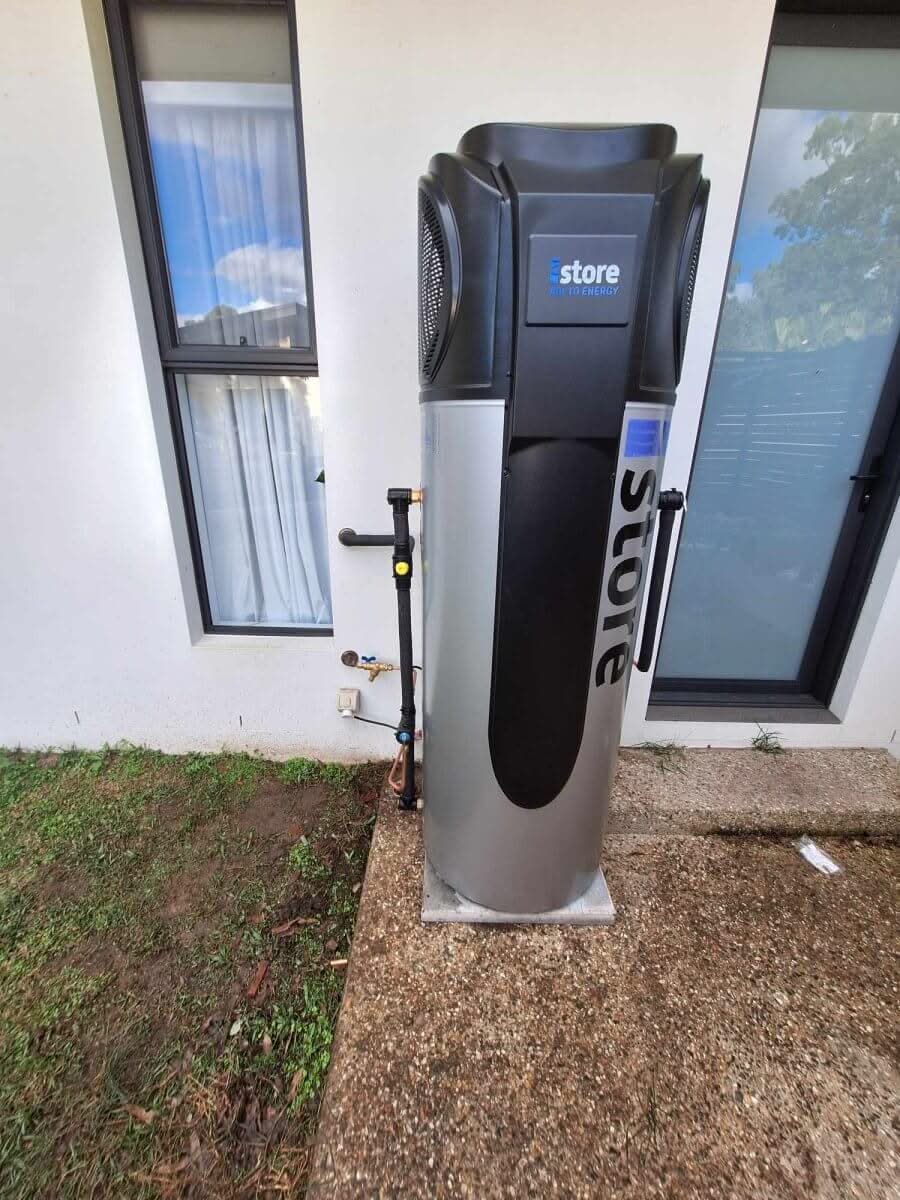
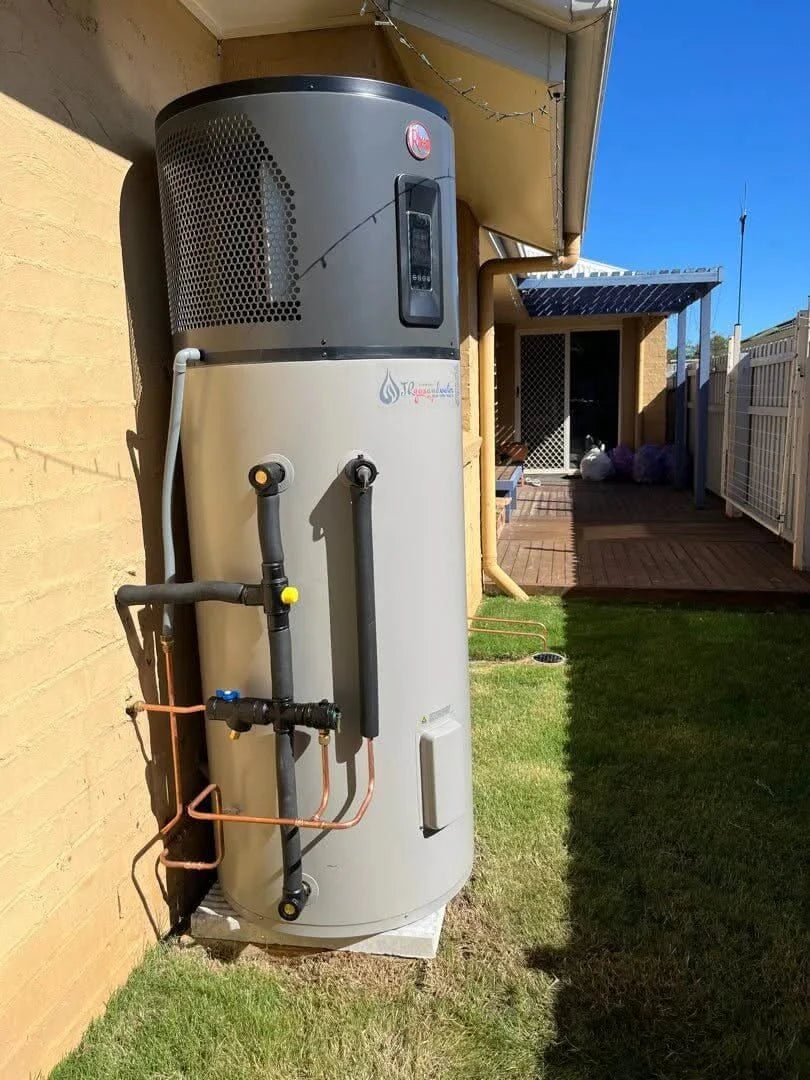
Heat pumps need suitable airflow to work properly. If the unit is installed in a tight, enclosed or poorly ventilated area, performance may suffer.
Before choosing a heat pump, check:
-
Manufacturer clearance requirements
-
Open-air space around the unit
-
Whether fences, walls or corners restrict airflow
-
Whether cold exhaust air can recirculate back into the unit
-
Whether the location allows service access
-
Whether the area traps heat or cold air
-
Whether the unit is suitable for the proposed location
A larger tank does not fix poor airflow. A well-placed 270L heat pump may perform better than a poorly placed 315L unit.
Condensate drainage matters
Heat pumps produce condensate as part of normal operation. That water needs to drain to a suitable location.
Before ordering, check:
-
Where condensate will discharge
-
Whether there is an existing drain nearby
-
Whether extra drainage work is needed
-
Whether water could create a slip hazard
-
Whether the discharge location is compliant
-
Whether the unit can be installed without causing nuisance water
Condensate drainage is one of the most commonly overlooked parts of heat pump installation.
Noise placement matters
Heat pumps include a fan and compressor, so they make operating noise.
Noise varies by brand and model, but placement is still important. Avoid placing a heat pump too close to:
-
Bedroom windows
-
Neighbouring bedrooms
-
Narrow side paths that amplify sound
-
Outdoor entertaining areas
-
Boundaries where noise could cause issues
-
Enclosed spaces that reflect sound
A 315L unit may give more capacity, but it still needs to be installed where airflow, access and noise placement are suitable.
270L heat pump: pros and cons
Pros
-
Good family-size option
-
Suitable for many 3–5 person households
-
More compact than larger systems in many cases
-
Can work well with solar-timed heating
-
Often a good balance of size and storage
-
Good replacement option where demand is moderate
Cons
-
May be tight for larger households
-
Less buffer than 315L
-
Can run short with long back-to-back showers
-
May not suit frequent bath use
-
Timer settings need to match household demand
-
Still depends on airflow, drainage and placement
315L heat pump: pros and cons
Pros
-
More stored hot water than 270L
-
Better for larger families
-
Better buffer for back-to-back showers
-
More forgiving with solar timer setups
-
Better for regular guests or baths
-
Lower risk of running out during peak demand
Cons
-
Larger tank size
-
May be more than smaller households need
-
Needs suitable space and access
-
May cost more depending on the model
-
Still needs correct airflow and drainage
-
Not a fix for poor installation location
Should I choose 270L or 315L?
Choose a 270L heat pump if:
-
The home has 3–5 people
-
Hot water use is moderate
-
Showers are not unusually long
-
The system has enough time to recover
-
The installation location has good airflow
-
The home does not use a large bath regularly
-
You want a balanced family-size heat pump
Choose a 315L heat pump if:
-
The home has 5 or more people
-
Several showers happen back-to-back
-
Teenagers or guests use a lot of hot water
-
A bath is used regularly
-
You want more storage buffer
-
The system will run on a solar timer
-
The old smaller system was close to running out
When could 270L be enough?
A 270L heat pump may be enough where the household uses hot water sensibly and the installation conditions are good.
It may work well for a family of four if:
-
Showers are moderate length
-
Bathrooms are not heavily used at the same time
-
There is no large regular bath use
-
The heat pump has enough time to recover
-
The timer setup matches the household’s routine
-
The system is installed in a suitable airflow location
For many standard family homes, 270L is a practical size.
When is 315L worth it?
A 315L heat pump is worth considering when the household wants more capacity and fewer complaints about running out.
It may be the better choice if:
-
The home has a larger family
-
Morning and evening shower periods are busy
-
A 270L system would be close to the limit
-
The home has a bath
-
Guests stay regularly
-
You want to run the system mainly during solar production hours
-
The household previously ran out with a smaller tank
For higher-use homes, the extra storage can be more useful than choosing the smallest tank that might just get by.
270L vs 315L vs standard electric hot water
A heat pump is different to a standard electric storage system.
| Option | Best suited to |
|---|---|
| 270L heat pump | Standard family use where heat pump conditions suit |
| 315L heat pump | Larger or higher-use households wanting more buffer |
| Standard electric storage | Simpler electric replacement where heat pump location, airflow or drainage may not suit |
You can compare Heat Pump Hot Water Systems with Electric Hot Water Systems if you are deciding between heat pump and standard electric storage.
270L vs 315L vs gas hot water
Some homes may also compare heat pump hot water with gas systems.
| Option | Best suited to |
|---|---|
| Heat pump hot water | Efficient electric hot water where airflow, drainage and location suit |
| Gas storage | Homes with suitable natural gas or LPG setup wanting stored hot water |
| Instant gas | Homes wanting continuous hot water where gas pipe sizing and water flow suit |
If the property already has gas, you may also compare Gas Hot Water Systems. For on-demand systems, view Instant Gas Hot Water Systems.
Natural gas and LPG are not interchangeable. Gas systems must be selected for the correct gas type and installed by a licensed gas fitter.
Brand options for 270L and 315L heat pumps
Common heat pump brands may include options from:
-
Emerald Energy Hot Water Systems
When comparing heat pump brands, look beyond tank size. Check:
-
Warranty terms
-
Compressor and element boost setup
-
Recovery performance
-
Noise level
-
Installation clearances
-
Condensate drainage requirements
-
Service access
-
Timer controls
-
Solar compatibility
-
Model dimensions
-
Whether the unit suits your household size
Installation and compliance reminders
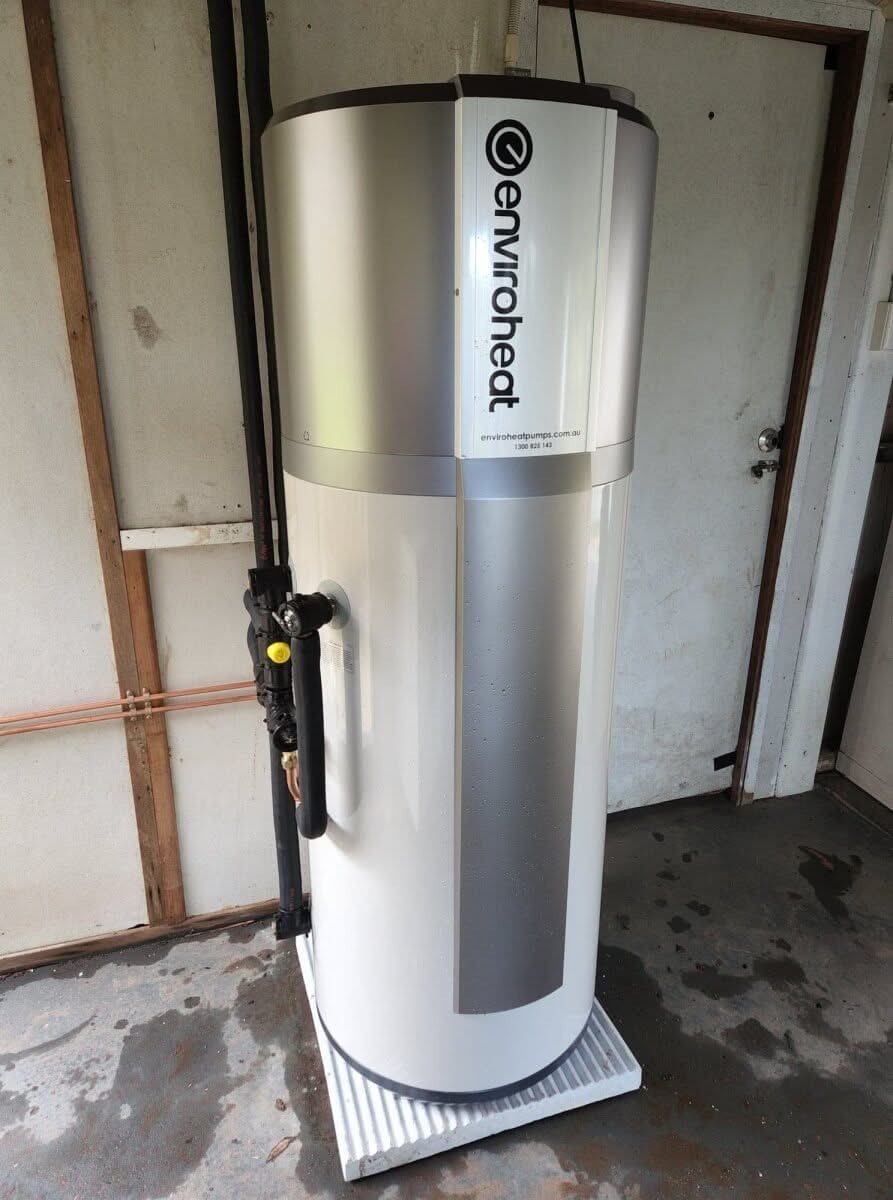
Heat pump hot water installation is not DIY work.
Use a licensed plumber for plumbing work and a licensed electrician for electrical work where required.
Important installation checks may include:
-
Tank dimensions
-
Access for delivery and removal
-
Base or slab requirements
-
Water pressure
-
Tempering valve requirements
-
Isolation valves
-
Pressure relief valve discharge
-
Condensate drainage
-
Electrical circuit suitability
-
Timer setup
-
Solar timing setup
-
Noise placement
-
Airflow clearances
-
Service access
-
Compliance with current plumbing and electrical requirements
Extra parts or site work may be required depending on the property. Relevant options may be available under Installation Add-Ons.
Supply-only vs supplied-and-installed
Installed Today offers heat pump hot water systems online with supply-only options across major metro areas.
For supply-only orders, you need to arrange your own suitable licensed installer. Heat pump systems involve plumbing, drainage and electrical requirements, so the correct licensed trades must be used.
Supplied-and-installed options are only available where shown in eligible Brisbane and Gold Coast service areas. Availability depends on the product, location and installation conditions shown at the time of ordering.
Before ordering, confirm the system size, installation location, airflow, condensate drainage, electrical suitability and any required add-ons.
Common mistakes when choosing between 270L and 315L heat pumps
Choosing 270L when the household is high-use
A 270L heat pump can suit many families, but it may be tight where showers are long, bathrooms are busy, or baths are used regularly.
Choosing 315L without checking space
A larger system needs suitable space, access, base support, drainage and clearances.
Ignoring airflow
Heat pumps need suitable airflow. Poor placement can reduce performance.
Forgetting condensate drainage
Heat pumps produce condensate, and that water needs a suitable discharge location.
Assuming tank size fixes recovery problems
A larger tank helps with storage, but recovery still depends on the model, settings, air temperature and installation location.
Setting the timer too short
A short solar timer window may not give the system enough time to recover after heavy use.
Placing the unit too close to bedrooms
Noise placement should be considered before installation.
Replacing like-for-like when the old system struggled
If the old system ran out regularly, the new system should be sized around current household demand, not just the old tank size.
Final verdict
A 270L heat pump hot water system is a strong choice for many 3–5 person households with normal family hot water use.
A 315L heat pump hot water system is usually better for larger families, higher-use households, regular back-to-back showers, bath use, guests, or solar-timer setups where extra stored hot water is useful.
The right choice depends on household demand, recovery time, airflow, condensate drainage, electrical suitability, noise placement, solar timing and installation access.
FAQs
Is a 270L heat pump enough for a family of four?
A 270L heat pump can be enough for a family of four with moderate shower use and suitable installation conditions. If showers are long or baths are used regularly, 315L may be safer.
Is a 315L heat pump enough for five people?
A 315L heat pump is often a better starting point for five-person households, especially where showers happen close together or the system is on a solar timer.
Is 315L too big for a small household?
It may be more than needed for one or two people. A smaller heat pump may be more suitable if hot water use is low.
Should I replace a 270L heat pump with another 270L?
That can make sense if the old system performed well. If it regularly ran out, consider 315L or another suitable option.
Can I replace a standard electric hot water system with a heat pump?
Often yes, but the site needs to suit a heat pump. Airflow, condensate drainage, electrical supply, noise placement and access must be checked.
Does a larger heat pump recover faster?
Not automatically. Tank size affects storage capacity, but recovery depends on the heat pump design, compressor capacity, air temperature, settings and installation conditions.
Does a heat pump need a drain?
Yes. Heat pumps produce condensate, and that water needs a suitable drainage point.
Can I run a heat pump during solar hours only?
Many households do, but the system needs enough storage and recovery time to meet evening and morning demand. A 315L system may be more forgiving than 270L for short timer windows.
Do I need an electrician for a heat pump hot water system?
Electrical work must be completed by a licensed electrician where required. The circuit, timer setup and electrical suitability should be checked.
Where can I compare heat pump hot water systems?
You can compare options in Heat Pump Hot Water Systems or browse all Hot Water Systems.